Our software runs in production for clients including UW Veterinary Care, Maine DOT, and NIEHS. Your first step is a thirty-minute conversation with an expert.
VetSci runs at University of Wisconsin Veterinary Care, DOTSci at the Maine Department of Transportation, and LabSci at the National Institute of Environmental Health Sciences. FormSense is available now and has been tested on real laboratory log sheets. Each record says what runs, how it works, and what we can show you when we meet.
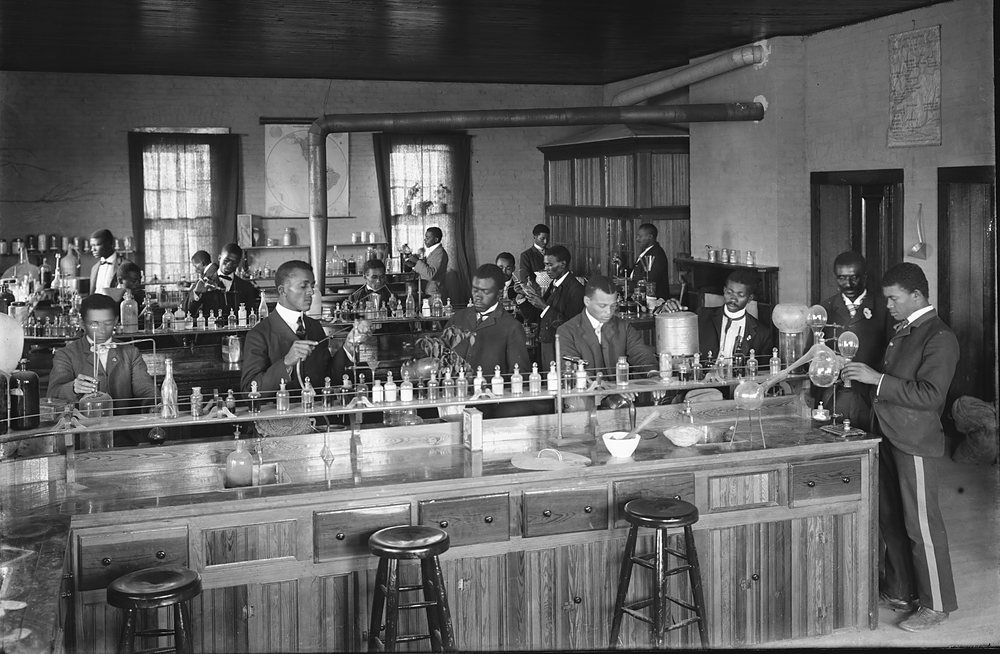
THEN · RESULTS STAY AT THE BENCH
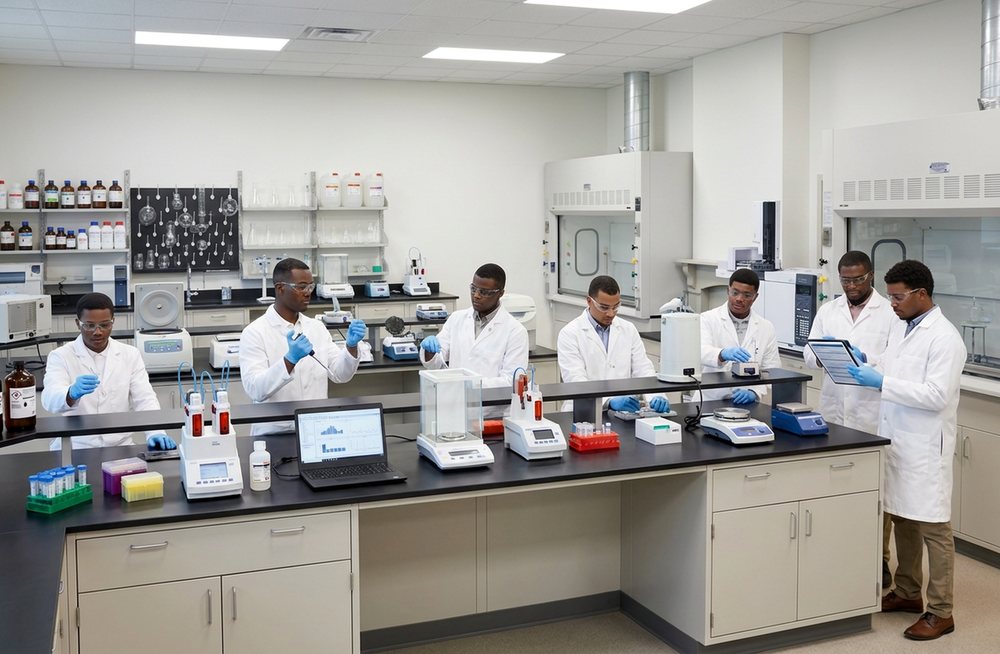
NOW · CLAIMS STAY ON THE RECORDNOW · DIGITALLY RENDERED
Fig. 1 The chemistry laboratory at Tuskegee Institute, Alabama, about 1902. Every result began at a bench like this one, written by the person who produced it.
THEN · 1902 · Library of Congress · NOW · digitally renderedTHEN · 1902 · Frances Benjamin Johnston · Library of Congress, Prints & Photographs Division · no known restrictions on publication · loc.gov/item/2014646471NOW · digitally rendered from the archive photograph above (Gemini 3 Pro Image, 2026-09-26): the room geometry, the camera and the people's positions are the photograph; everything else is generated. Not a photograph.
01How to read the records
What each record tells you
Each record names the laboratory, says what runs there and how it works, and shows what we can share with you. Screens and figures from a client’s own laboratory are shown in a conversation, with that client’s permission.
If you want a reference that matches your laboratory, talk with an expert and ask for one by discipline.
02The engagements
Three delivered engagements, and FormSense
VetSci · in production since 2022
University of Wisconsin Veterinary Care
Claim VetSci runs the hospital laboratory workflow at University of Wisconsin Veterinary Care, from accessioning through reporting.
Mechanism VetSci is built on LabSci, natively on Microsoft Dataverse. Instrument interfaces carry analyzer results into the laboratory record without retyping, and review states hold results until a reviewer signs. Interfaces were delivered per instrument, for blood-gas, chemistry, immunoassay, susceptibility, coagulation, and microbiology identification analyzers, and over HL7 for the hospital’s practice-management system.
Artifact A redacted accession record with instrument results attached, shown in full in a conversation with the client’s permission.
Result University of Wisconsin Veterinary Care · VetSci · instrument interfaces delivered for its analyzers and its practice-management system.
State of Maine, RFP 201902032, Award Justification Statement, 2019
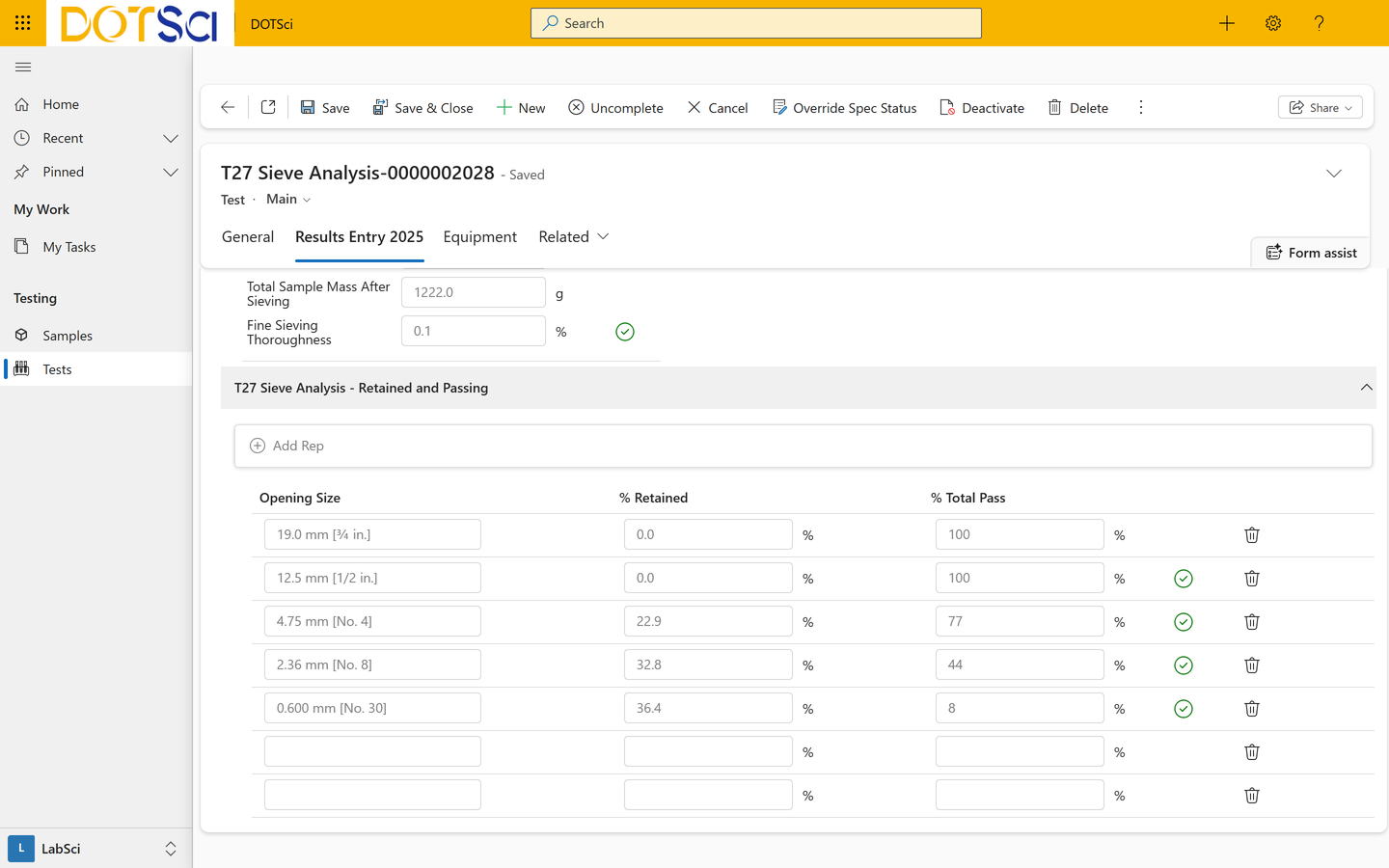
Result Maine Department of Transportation · DOTSci.
Fig. 2 Result entry against the method. The specification check runs as you type, and the validate step gates the report.
SCREENSHOT · 2026 · SynapticSci demo environment · masked capture, synthetic records
National Institute of Environmental Health Sciences
Claim Laboratory notebook workflows moved into the LabSci platform at the National Institute of Environmental Health Sciences.
Mechanism The workflows moved into LabSci, a configurable laboratory platform built natively on Microsoft Dataverse and the Power Platform, with audit history and review states the notebook never had.
Artifact A redacted notebook-style record in the platform, shown in full in a conversation with the client’s permission.
Result National Institute of Environmental Health Sciences · LabSci · laboratory notebook workflows moved into the platform.
Claim FormSense captured handwriting on real laboratory log sheets and wrote reviewed staging records.
Mechanism Microsoft’s document-reading service in Azure reads the sheet. Every field carries what was read, the final value, a confidence score, how it was derived, and any override. Low-confidence fields are held, and nothing commits to a record until a reviewer approves it. Human review is the output control.
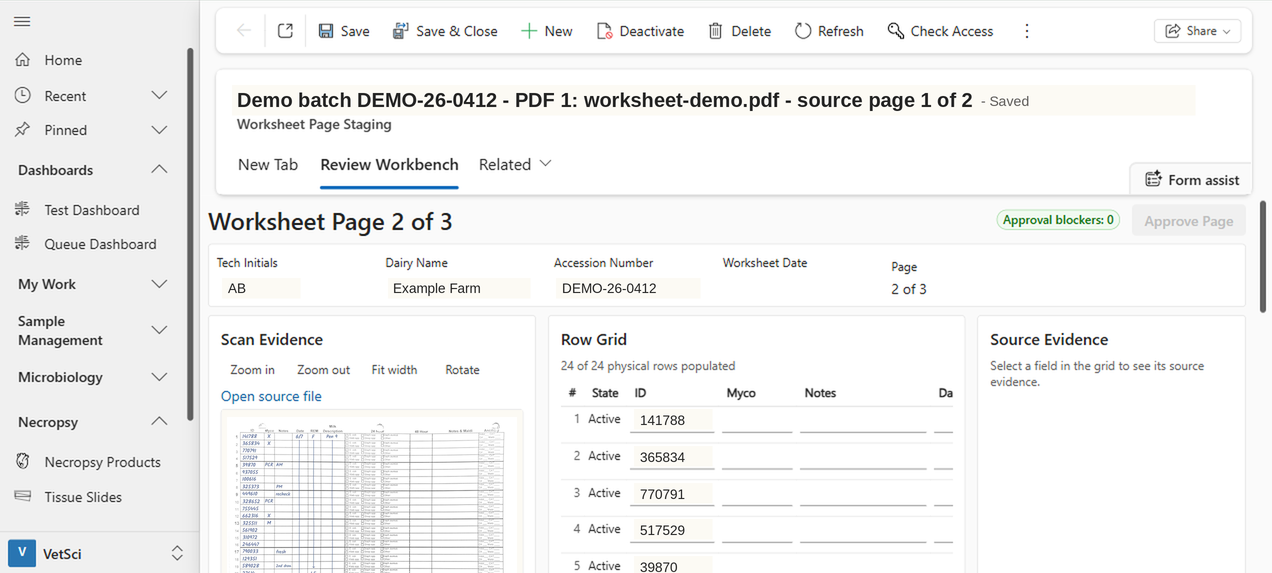
Artifact The masked Review Workbench capture below, with identifiers replaced and synthetic data, and the anatomy of one reviewed field. We run the live demonstration in a session, on a copy of your own form.
Boundary FormSense is available now. Measured read rates, review times, and exception counts are shown in a conversation.
Result FormSense on real laboratory log sheets · masked screenshots shown, with measured figures in a conversation.
Fig. 3 The Review Workbench: scan, row grid and source evidence side by side before anything commits. Identifiers replaced; data synthetic; the scan pane shows a synthetic worksheet.
SCREENSHOT · 2026 · SynapticSci demo environment · masked capture, banner cropped, nothing blurred
Fig. 4 The Review Workbench and the anatomy of one reviewed field, with synthetic data and illustrative confidence figures.