

Products & services · Software
VetSci
University of Wisconsin Veterinary Care runs its hospital laboratory on VetSci, and our software also runs for other clients, including Maine DOT and NIEHS. Your first step is a thirty-minute conversation with an expert.
VetSci is a laboratory information management system (LIMS) for veterinary hospital and diagnostic laboratories. It carries each case from accessioning through the sections, review, and sign-out to the report and the invoice, on one record. It is designed to support AAVLD accreditation requirements. The first step is a conversation with one of our laboratory informatics experts.
A LIMS that knows a herd from a patient.
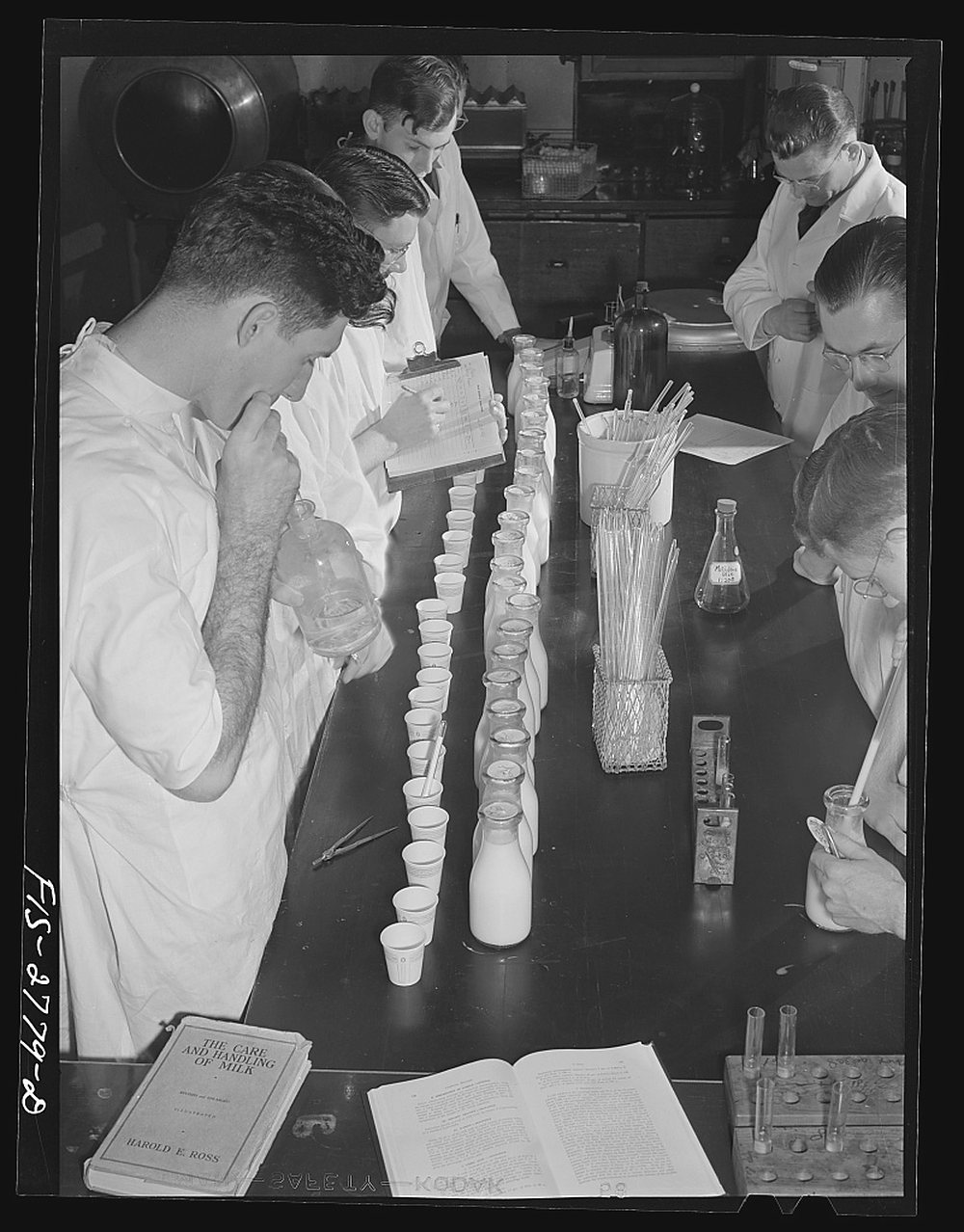
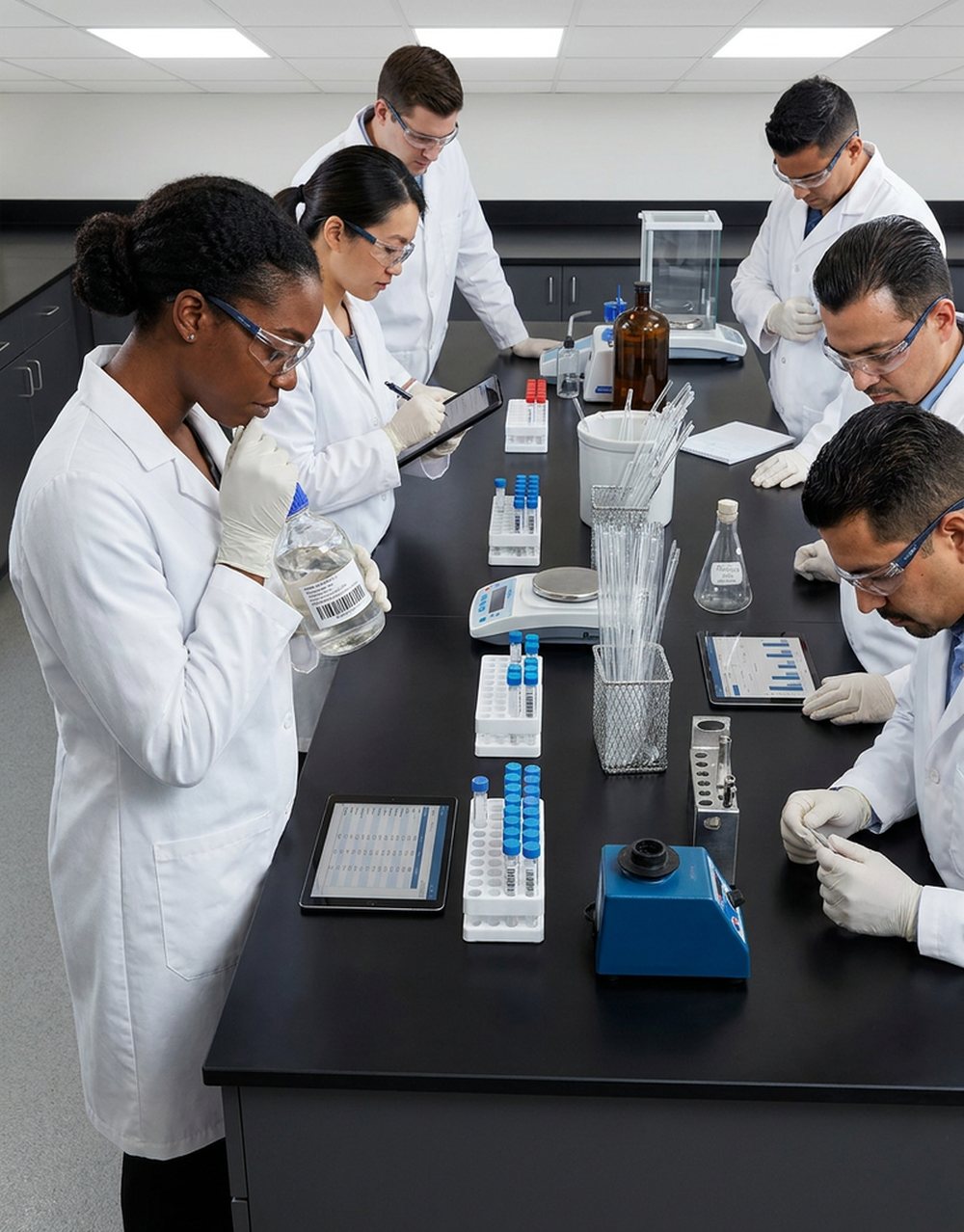
THEN · 1942 · Library of Congress · NOW · digitally rendered
THEN · 1942 · Jack Delano · Library of Congress, Prints & Photographs Division, Farm Security Administration/Office of War Information Black-and-White Negatives · no known restrictions on publication · loc.gov/item/2017831307 NOW · digitally rendered from the archive photograph above (Gemini 3 Pro Image, 2026-09-26): the room geometry, the camera and the people's positions are the photograph; everything else is generated. Not a photograph.Opens your print dialog. Choose Save as PDF.
01Who this is for
Built for veterinary hospital and diagnostic laboratories
VetSci is for university, state, and private veterinary hospital and diagnostic laboratories. These laboratories receive specimens from clinics, farms, and field veterinarians, run them through several sections, and send a signed report back. VetSci also fits reference laboratories that do the same work for other laboratories.
If you are comparing LIMS for veterinary diagnostic labs, our Lab Note Choosing the right veterinary LIMS sets out the features to weigh in a veterinary laboratory information system.
We will be at the 2026 AAVLD/USAHA Annual Meeting in Madison, October 15–21. Bring us your form at our booth. AAVLD/USAHA 2026 →
Not for Veterinary practices and clinics looking for a practice-management system.
02The problem
Why laboratories replace what they have
Some laboratories run a system built for a different decade, and the one person who still knows how to maintain it is retiring. The question stops being whether to replace it and becomes what survives the migration.
Other laboratories do sound work on a scattered record. Intake is on paper, results sit in the instrument software, and reports go out as email attachments. The science holds up, but the trail behind it is hard to follow.
And other laboratories face an accreditation cycle with records spread across systems that were not designed to answer an assessor’s question, while their IT department wants everything on the Microsoft tenant it runs today.
03How we help
Accessioning to report, on one record
VetSci follows each case the way your laboratory works it. Accessioning resolves the patient and the submitter at the desk and prints the labels. Instrument results land on the case as the runs finish, and each section works from its own worksheets. Reports go to submitters as PDF and through a portal, and invoicing bills the same record.

Accessioning
Resolved at the desk; barcode labels print.
Cases and worklists
Every sample sits on a case, and every case sits on a worklist that someone owns.
Chemistry and hematology
Results arrive with their controls.
Microbiology
Isolates, identification, and susceptibility, on the case.
Serology and molecular
Batch result entry; every result reviewed before release.
Review and sign-out
Who changed a value, when, and what it was before.
Reporting to submitters
Reviewed, signed, delivered as PDF and through a portal.
Invoicing
Billed from the same record that produced it.
Patient merge
Duplicate patients reconciled without losing either history.
Instrument interfaces
Per analyzer, plus HL7.
Testing milk samples in the veterinary school laboratory at Iowa State College, Ames, 1942
1942, Library of Congress, no known restrictions
The product documentation builds every VetSci record from five concepts, from the Accession to the Report artifact, and its typical workflow runs in four steps.
- An order or intake creates the accession.
- Request items and tests are generated or attached.
- Results are captured and validated.
- Completion rules gate the report and everything sent downstream.
A preliminary result therefore cannot go out as a final report. The full documentation set comes with the product.
When paper still arrives, FormSense reads it
Submission forms and log sheets still arrive on paper, and someone still types them in. FormSense reads each page and shows every field to a reviewer with its confidence score. Once the reviewer approves, the record goes into VetSci, or into the LIMS you run today through an adapter scoped with you.
04Method
Understand first, then one proven step at a time
We start with a fixed-scope on-site Understand phase, where we study how your laboratory works today. Then we build one proven step at a time, so your laboratory sees a working result before committing further. The four phases are Understand, Build, Adopt, and Sustain, and each runs as an experiment in which we hypothesize, test, and keep what proved. How we work describes each phase and how estimates are made.
Understand documents your laboratory's workflow as it is, before anything is configured. Build delivers one piece of the system at a time, each accepted by your own people. Adopt takes it live, and after go-live comes Sustain, where a named Laboratory Informatics Scientist improves your system one release at a time.
05Platform
Built on LabSci and Microsoft Dataverse
VetSci is the veterinary product on LabSci, our configurable laboratory platform built natively on Microsoft Dataverse and the Power Platform.
VetSci installs as a product layer over LabSci. Your laboratory's own configuration lives in a client solution above both, so product releases do not overwrite your work. Audit history, role security, and controlled records are administered through existing Dataverse features.
06Evidence
Where VetSci runs today
We have delivered work in a veterinary hospital laboratory.
Claim University of Wisconsin Veterinary Care runs its hospital laboratory on VetSci, from accessioning to the signed report.
Mechanism Accessioning, cases, instrument interfaces, review and sign-out, reporting, and invoicing share one Dataverse record, with microbiology, serology, and molecular sections.
Artifact The laboratory’s own screens, shown in a conversation with its permission.
Result University of Wisconsin Veterinary Care · VetSci · in production since 2022 · instrument interfaces delivered for its analyzers and its practice-management system.
07Accreditation
Designed to support AAVLD accreditation
VetSci is designed to support AAVLD accreditation requirements, mapped clause by clause. When we meet, we walk you through how VetSci maps to each AAVLD requirement. The accreditation body accredits your laboratory, and your laboratory validates the system it runs. We build VetSci so that work is easy to defend. Trust → accreditation
08Pricing
Licenses and hosting, then Sustain, then the project
Table 1 LabSci license and hosting prices by item, the same as on Pricing. VetSci runs on LabSci. Each is its own annual price.
Per year · minimum commitment twelve months · effective 1 October 2026. License and hosting are separate prices, and no combined figure is stated. Hosting: hosted by SynapticSci; none when self-hosted in your own tenant; requires the matching LabSci licence.
| Item | License | Hosting |
|---|---|---|
| Lab Userper named Lab User | $2,346 | $305 |
| Designer/Adminper named Designer/Admin | $4,691 | $611 |
| Portal, authenticated usersper pack of 100 authenticated portal users | $3,892 | $3,053 |
| Portal, anonymous visitorsper pack of 500 anonymous portal visitors | $1,348 | $1,145 |
Implementation is scoped after the Understand phase. Sustain gives you a named Laboratory Informatics Scientist who improves the system release by release. It is a Service Level of Included Hours, sized to your laboratory and priced per year on a twelve-month minimum (Pricing).
Migration is its own project, and you choose how much history moves.
- No migration
- Active data plus a year of history
- Everything
We price migration after we have seen the source system. Talk with an expert to work through implementation and migration for your laboratory.