

SynapticSci · Louisville, Kentucky · www.synapticsci.com
Our Science · How we work · Before the first meeting
The questions we ask first. Map a laboratory workflow
- Veterinary diagnostic labs stop retyping submission forms.
- Materials and transportation testing labs stop retyping field sheets.
- Government research and contract testing labs keep requests and results together.
- Environmental and other testing labs replace a LIMS that no longer fits.
Our software runs in production for clients including UW Veterinary Care, Maine DOT, and NIEHS. Your first step is to bring this worksheet to a thirty-minute conversation with an expert.
Print this worksheet, answer what you can, and bring it to your first conversation with us. It holds the questions we ask in the first hour of the Understand phase, our on-site analysis of your workflow, in six groups. Each question says why we ask it, and your answers become the agenda for that first hour.
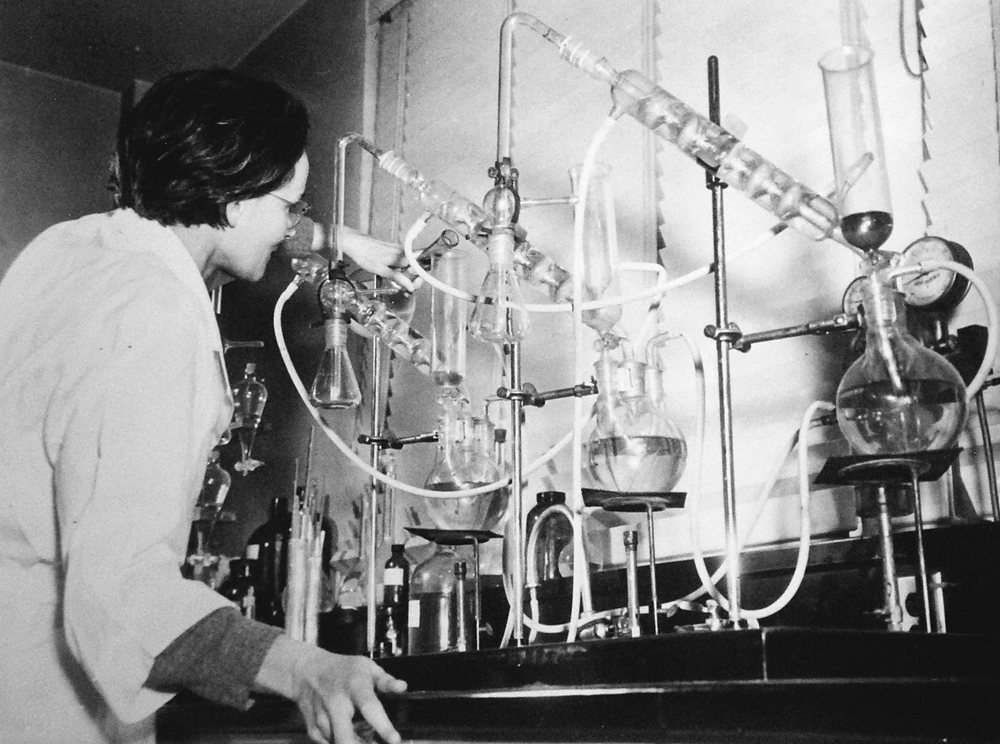
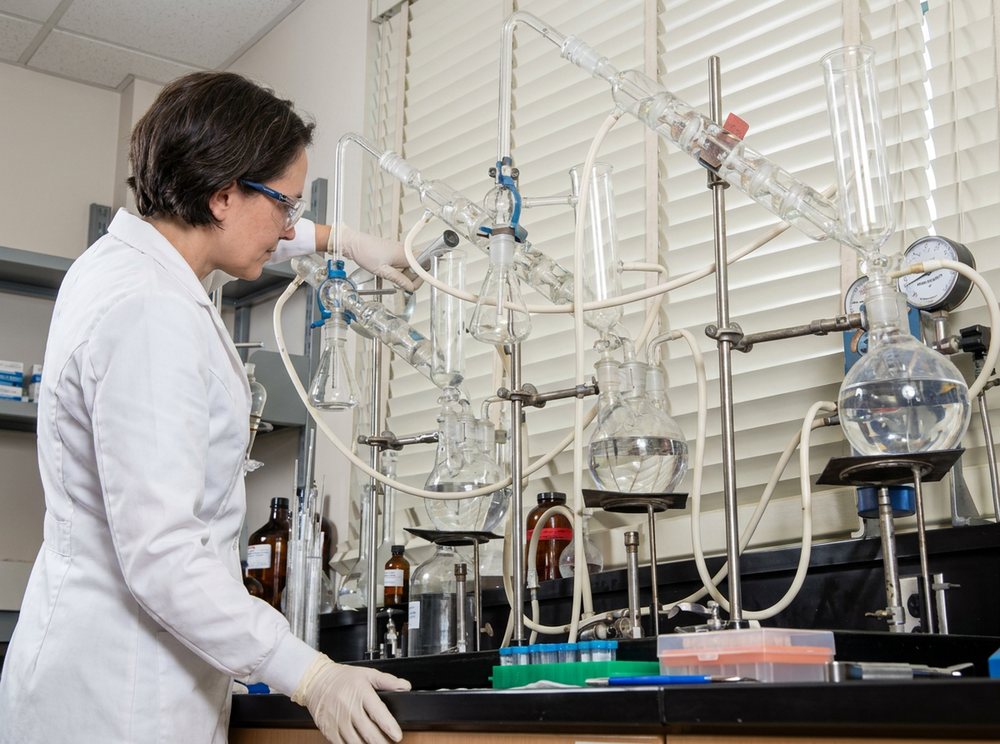
THEN · undated · Wikimedia Commons · NOW · digitally rendered
THEN · undated · Wikimedia Commons · public domain NOW · digitally rendered from the archive photograph above (Gemini 3 Pro Image, 2026-09-15): the room geometry, the camera and the people's positions are the photograph; everything else is generated. Not a photograph.01How to use it
Print it, answer what you can, and bring it.
We ask these questions in the first hour of the Understand phase. Answer what you can, and leave the rest for the conversation.
Download the questions as a PDF and bring your answers to your first conversation with us.
Understand is the first of our four phases, followed by Build, Adopt, and Sustain. It is an on-site analysis of how your laboratory works, and it ends in a needs summary, user stories, and plans that you hold before any fixed price is set. How we work describes all four phases.
The conversation starts where your answers stop, and we ask the questions you leave blank at your bench.
What your answers become
Each answer becomes part of the needs summary, and each need becomes a user story with a place in your priority order. Every story carries an estimate you can see. We plan against a probabilistic baseline instead of a best case, and we show you the confidence level we planned to.
The questionnaire sizes the work, and pricing comes later. Pricing explains how we price, with the Understand phase under project services. Evidence shows the work we have delivered, and Trust sets out the data and migration terms.
What we will ask
Six groups of questions
- Lab and regulatory context. What is driving the timeline, such as an assessment, a retirement, a contract, or plain frustration?
- Sample and test scale. How many samples arrive on a normal day, and on the worst day of your year?
- Users and access. Who receives your reports, and do they arrive by portal, PDF, fax, or mail?
- Instruments and integrations. Which instruments produce results that someone types in by hand?
- Workflow, validation and risk. Which paper forms arrive with samples, and which does the bench fill in by hand?
- Data migration. If you moved, would you bring no history, the active year, or everything?
The PDF has every question, each with the reason we ask it.
02Lab and regulatory context
What the laboratory is, and who it answers to
What is driving the timeline, such as an assessment, a retirement, a contract, or plain frustration?
Why we askThe driver decides what has to work first and what can wait, and it tells us what “done” means to you.
Which regulatory or program reports does the laboratory file, and how are they assembled?
Why we askReporting obligations set the shape of the record. A report assembled by hand every quarter is a workflow we need to see.
What system holds the laboratory record today, and how old is it?
Why we askThe age of the system tells us about its data model, and about what a migration will meet when it opens the source.
What does it still do well, and what do people quietly work around?
Why we askThe workarounds are the requirements nobody wrote down. What still works well is what the first delivery must not break.
Does a vendor, your IT group, or one person who knows where everything is support it today?
Why we askThe answer sets the risk in the years after go-live, and it names the people we will work beside.
03Sample and test scale
How much arrives, and in what form
How many samples arrive on a normal day, and on the worst day of your year?
Why we askWe plan capacity for the busiest day. The worst day is also the day the current system is most worked around.
How do samples arrive (courier, mail, drop-off, field collection), and who logs them in?
Why we askIntake is where the record starts. Who logs the sample in decides where the first screen goes and what it has to carry.
How many distinct sample types and test panels does the laboratory run?
Why we askThe count sizes the configuration work, because methods, specifications, result codes, and units are rows we set up together. It is a better measure than sample volume.
04Users and access
Who touches the record, inside the laboratory and outside it
Who receives your reports, and do they arrive by portal, PDF, fax, or mail?
Why we askThe report is the product your submitters see. Its form decides whether a portal belongs in the first delivery or a later one.
Can submitters check the status of their samples without calling the laboratory?
Why we askEvery status call is bench time. A portal changes who answers the question, and how often it is asked.
Does your organization run Microsoft 365, and who administers the tenant?
Why we askOur platform is built natively on Microsoft Dataverse and the Power Platform. If your tenant exists, the people who run it are part of the answer, and the system can live where your data already does.
Who has to approve a new system (IT, security, purchasing, a parent agency), and in what order?
Why we askThe approval order is the real project timeline. We plan the Understand phase around it rather than discover it afterward.
05Instruments and integrations
Which results arrive by hand, and which by wire
Which instruments produce results that someone types in by hand?
Why we askEvery hand-typed result is a transcription step, and a candidate for an interface. We list them before we rank them.
Which instruments are already interfaced, and does each connect through ASTM, HL7, middleware, or vendor software?
Why we askWe either keep an existing interface or rebuild it, and in both cases we need to know the protocol it uses. We deliver interfaces per instrument and per laboratory.
When an instrument is replaced, who rebuilds the connection?
Why we askAn interface outlives its instrument only if someone owns it. The answer tells us who owns the connection after go-live.
06Workflow, validation and risk
Where paper enters, and where a signature releases a result
Which paper forms arrive with samples, and which does the bench fill in by hand?
Why we askThe forms are the record before any system sees it. We read them before we read the screens.
Who retypes paper into a system today, and roughly how many hours a week does it take?
Why we askYour own count of hours is the baseline we measure against. The person doing the re-keying is the first user we design for.
Where do the filled worksheets go after they are transcribed, and who could find one from last March?
Why we askA record is only useful if you can find it. Finding old records is a requirement in its own right.
Who reviews and signs results before they release, and on what screen or paper does that happen?
Why we askReview and sign-out is a control an assessor examines. We configure it to the way you do it now.
When a released result is amended, how is the original preserved?
Why we askAmendment history is the audit trail. How you preserve the original today is how the system must preserve it.
07Data migration
How much history moves, and how far back
How many years of records live in the current system, and how far back do searches actually go?
Why we askThe years you search are the years worth migrating. The rest may be archived rather than moved.
If you moved, would you bring no history, the active year, or everything?
Why we askMigration is a project of its own, priced after we have seen the source. The depth you choose sets its size.
08How to send it
Bring it to the conversation, or send it ahead.
Download the questions as a PDF and bring your answers to the conversation.
Print or save the questions as a PDF and bring them to the conversation. To book a conversation, talk with an expert for thirty minutes on your calendar.
You can also email your answers to info@synsci.com, and we will read them before we meet.
SynapticSci · Map a laboratory workflow · www.synapticsci.com/how-we-work/map-a-workflow/ · informational only · not a quote