

Products & services · Services
Sustain, an ongoing service for the years after go-live
Sustain looks after the system your lab runs on.
- VetSci in veterinary diagnostic labs
- DOTSci in materials and transportation testing labs
- LabSci in research and other testing labs
Our software runs in production for clients including UW Veterinary Care, Maine DOT, and NIEHS. Your first step is a thirty-minute conversation with an expert.
After go-live your laboratory keeps changing, and someone has to keep the system working and up to date. With Sustain, a named Laboratory Informatics Scientist makes the changes you ask for, in your priority order, and we fix what breaks. Sustain starts at contract execution, and the first step is a conversation with one of our laboratory informatics experts.
When an instrument, a method, or a rule changes, your system keeps pace on a cadence you choose.
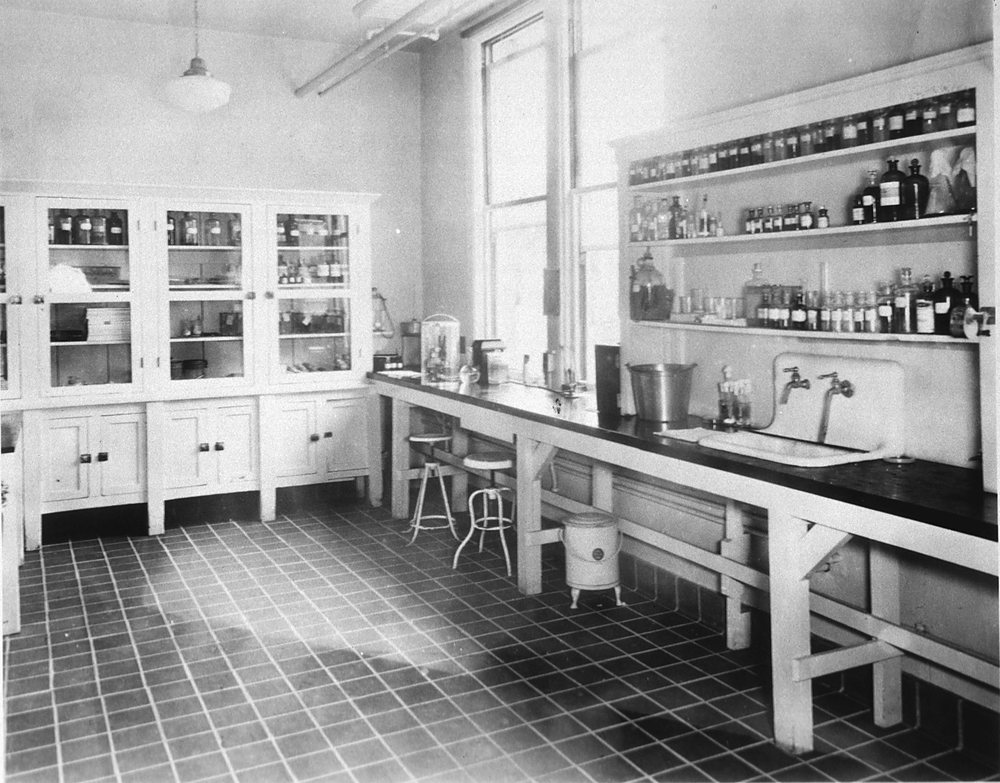
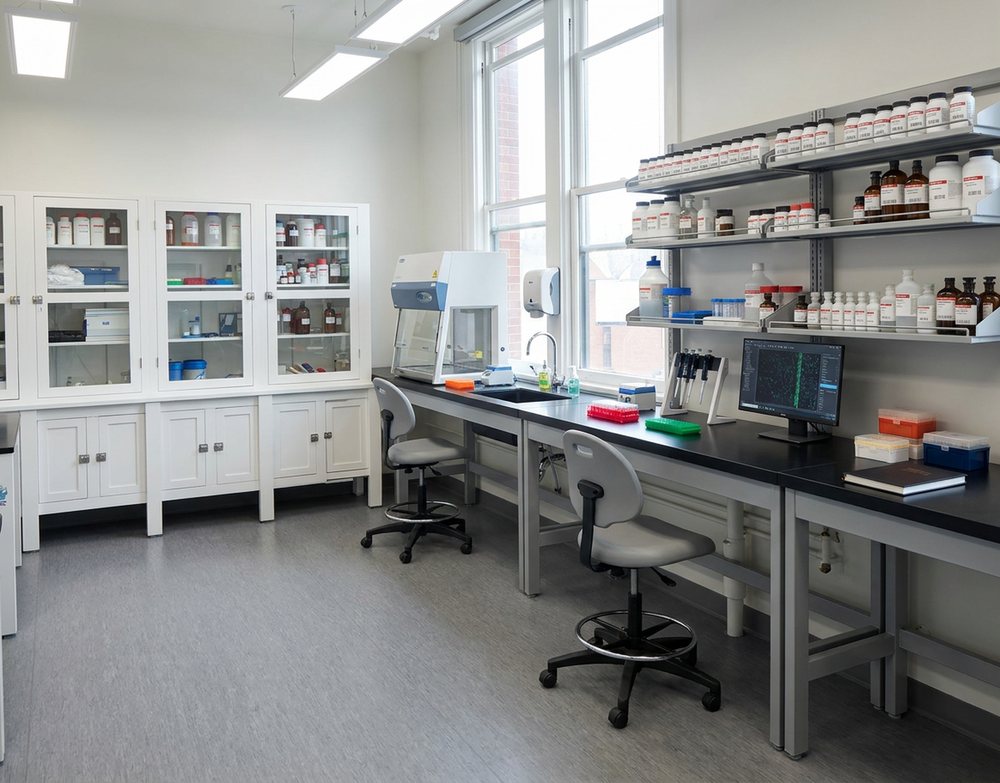
THEN · undated · National Library of Medicine · NOW · digitally rendered
THEN · undated · National Library of Medicine · public domain NOW · digitally rendered from the archive photograph above (Gemini 3 Pro Image, 2026-09-26): the room geometry, the camera and the people's positions are the photograph; everything else is generated. Not a photograph.01Who this is for
Laboratories with a system in service, and the people who pay for it
Sustain is for a laboratory that runs LabSci, VetSci, or DOTSci and wants the system to keep pace with the laboratory. Its terms are the same for the director who owns the budget line, the purchasing office that codes it, and the IT group that administers the tenant.
On our practice and problem pages
Sustain appears on these practice and problem pages, next to the other approaches each page weighs.
Practice pages
- Veterinary Diagnostics
- Transportation & Materials Testing
- Government Research Laboratories
- Laboratory Modernization
Problem pages
Not for Building the system itself. Implementation is a project, scoped after the Understand phase, our fixed-scope, on-site study of your laboratory. Sustain starts at contract execution. What Sustain is not →
02The problem
What happens to a system in the years after it goes live
Change keeps coming after go-live. The state asks for a new report, a section retires a test panel and adds two, the bench redesigns a form, or an instrument is replaced. Each is a piece of work too small to be a project and too important to wait for one.
A common answer is a block of hours, bought when a request comes up. A block pays for the work, but it does not buy a standing review of the backlog, a named person, or a place in a priority order. The laboratory ends up rationing its own requests, and the people who raise them stop raising them.
Meanwhile, the platform underneath moves on its own schedule. Platform updates arrive, environments need health checks, backups need proving, and documentation drifts. Someone has to watch all of it, and that is rarely the person who also signs out results.
03How we help
Three questions decide who does what.
Every request your laboratory raises gets one of three answers, and each answer is bought a different way.
A Service Level is Included Hours each month, and the meetings that steer them.
Your named Laboratory Informatics Scientist works your backlog, in your priority order, from the Included Hours your Service Level carries each month. Status Check-ins, Backlog Reviews, and Executive Reviews decide what those hours go to, and none of those meetings draws on them. The four Service Levels differ in hours and in how often each meeting happens.
Table 1 Sustain Services: the four Service Levels, the same price records as Pricing.
Per Service Level · per year · minimum commitment twelve months · effective 1 October 2026. Every Service Level includes Status Check-in, Backlog Review and Executive Review meetings and Break-Fix support, none of which draw Included Hours. Unused Included Hours roll forward to at most one month's allocation and expire at the end of the Contract Term. It excludes effort beyond Included Hours, which needs written approval and is billed at the Service Level Rate in the Order.
| Service Level | Included Hours per month | Status Check-in | Backlog Review | Executive Review | Price |
|---|---|---|---|---|---|
| Silver | 15 | monthly | quarterly | yearly | $39,312 |
| Gold | 30 | every two weeks | monthly | quarterly | $73,008 |
| Platinum | 60 | weekly | every two weeks | quarterly | $134,784 |
| Titanium | 120 | weekly | weekly | monthly | $247,104 |
What a typical Improvement looks like
Each of these is a typical Improvement, about a week of work.
- a new report or a change to a template
- a new worklist, view, or dashboard
- an automation on data already in the system
- a test panel or catalog configuration
- a mapping change to an interface we have already built
- new fields on a form your team already uses
- portal content or branding changes
Clients may submit an unrestricted number of requests to the backlog. Your Service Level's Included Hours set how much we develop each month, and requests are worked in the client's own priority order.
Leadership
If you run the laboratory
Sustain is priced per year, with a twelve-month minimum. You choose the Service Level by how much change your laboratory wants to absorb each month, and Coverage by the hours you need us to answer in. Both are lines your purchasing office can code to a purchase order, and the Service Level can change at renewal, up or down.
Bench
If you work the bench
You raise the request with what it costs you on a Tuesday, such as the worklist that should exist, the field the form lacks, or the report retyped by hand. It goes on the backlog in your laboratory's own priority order. When its turn comes, it is worked from your Included Hours and ships as a release, with progress updates as the work moves and a Status Check-in on your Service Level's schedule.
QA
If you review and sign
Every request closes when you verify the outcome, and release notes record what changed. A change that requires formal validation before it can be used is a project. Your laboratory validates the system, and the audit trail, role-based access, and controlled records the platform keeps are what that validation stands on.
IT
If you administer the tenant
Releases ship as managed Dataverse solutions, through the environments your tenant already runs. Coverage includes user support, defect handling, and platform and environment health at standard hours, and we review platform updates as part of it. Extended Hours and 24×7 Coverage are Coverage additions, priced per year in Table 2. Severity A is as defined in your order form and the Master Agreement.
04Method
Understand, Build, and Adopt, then Sustain, which does not end
We start with a fixed-scope on-site Understand phase, then build one proven step at a time, so your laboratory sees a working result before committing further. The fourth phase of Scientist-Driven Development is Sustain. It covers the years after go-live, and it is the only phase without an end date. How we work describes the first three phases.
The path every request takes
Every request moves through the same five steps, whether it is a defect or an improvement. Only the answer at Scope differs.
- RaiseYou submit the request and its impact on your laboratory’s work.
- TriageWe confirm severity with you and assign a Laboratory Informatics Scientist.
- ScopeRestore, Improve, or Commit is decided, with its place in your priority order.
- DeliverWe build, test, and deploy, with progress updates as the work moves.
- CloseYou verify the outcome, and release notes record what changed.
When we answer
Coverage is the second thing you choose. At the hours you buy, Coverage covers four areas.
- User support, from questions to troubleshooting reported issues
- Defects and configuration, including minor configuration fixes and escalation to development
- Platform and environment health, including Microsoft platform update reviews and health checks
- Deployment, compliance, and continuity, including backup and recovery checks and documentation updates
Defects in what we delivered are always Restore, so they never draw your Included Hours. Standard Coverage comes with LabSci software. A Coverage addition extends initial response beyond its hours and carries no guaranteed resolution time. Severity levels, Severity A included, are as defined in your order form and the Master Agreement.
Table 2 Coverage: Standard Coverage, and the two Coverage additions with the same price records as Pricing.
Coverage additions: per year · minimum commitment twelve months · effective 1 October 2026 · requires Standard Coverage, included with LabSci software. A Coverage addition extends initial response only. Provider local time is US Eastern time. Severity A is as defined in your order form and the Master Agreement.
| Coverage | Terms | Price |
|---|---|---|
| Standard Coverageincluded with LabSci software | Monday to Friday, 09:00 to 17:00 US Eastern time, excluding U.S. federal holidays; Break-Fix support included | Included |
| Extended Hours Coverageper Coverage addition | initial response on business days from 07:00 to 23:00 provider local time; no guaranteed resolution time | $49,920 |
| 24×7 Coverageper Coverage addition | initial response twenty-four hours a day, seven days a week, for Severity A incidents only | $124,800 |
05Platform
Releases ship through the environments your tenant already runs
Improvements and fixes ship as managed Dataverse solutions through your development, user acceptance testing, and production environments, in your tenant or hosted by SynapticSci. Each release comes with release notes, on the same path your implementation took.
06Evidence
What a system looks like once it has been in service a while
A system we deliver stays in service for years and keeps gaining capability after go-live. Improvements ship as releases through your own environments, and defects are fixed as Restore.
Claim University of Wisconsin Veterinary Care runs its hospital laboratory on VetSci, with instrument interfaces delivered for its analyzers and its practice-management system.
Artifact The laboratory’s release notes and request backlog, shown in a conversation with its permission.
Result University of Wisconsin Veterinary Care · VetSci · in production since 2022 · instrument interfaces delivered for its analyzers and its practice-management system.
See the record →
07Boundaries
What Sustain is not
Sustain is not
- mandatory unless the approved contract requires it
- a way to buy a project
a project of its own
- Migration is always a project of its own.
- A change that needs formal validation is a project, and your laboratory validates it.
A Service Level
- Included Hours and a meeting cadence
- Work beyond those hours needs your written approval first.
- Response times are contract terms in your order form.
08Pricing
Part three: a Service Level per year, on a twelve-month minimum
Sustain is the third of the four parts we sell. It is a Service Level plus any Coverage additions, each priced per year with a twelve-month minimum. Standard Coverage is included with your license, and the Service Level can change at renewal, up or down.
Time and materials and fixed scope are the two ways to contract a project, and both sit in the project services part. Sustain is a separate part.
Service Level prices and terms → · Coverage additions →
Prepaid blocks, a Professional Service
Occasional help without a Service Level is bought as a prepaid block of Laboratory Informatics Scientist hours. Blocks are Professional Services and sit outside Sustain. Each block is priced as a whole. Blocks buy you time, and Sustain buys you momentum.
Table 3 Prepaid blocks, the same price records as Pricing → Project services.
One-time · effective 1 October 2026 · drawn down hourly against approved Professional Services; expires twelve months after purchase unless the Order states otherwise; no rollover beyond expiry.
| Block | Price |
|---|---|
| Prepaid block, 50 hoursper prepaid block of 50 Laboratory Informatics Scientist hours | $12,350 |
| Prepaid block, 100 hoursper prepaid block of 100 Laboratory Informatics Scientist hours | $23,400 |
| Prepaid block, 250 hoursper prepaid block of 250 Laboratory Informatics Scientist hours | $55,250 |
| Prepaid block, 500 hoursper prepaid block of 500 Laboratory Informatics Scientist hours | $104,000 |
Questions a purchasing office asks
- Does support cost extra?
- Standard Coverage is included with your license. Extended Hours and 24×7 Coverage are Coverage additions, priced per year. Severity A is as defined in your order form and the Master Agreement.
- What happens if we submit more requests than our Included Hours cover?
- Clients may submit an unrestricted number of requests to the backlog. Your Service Level's Included Hours set how much we develop each month, and requests are worked in the client's own priority order. Effort beyond Included Hours needs your written approval first and is billed at the Service Level Rate stated in your order form.
- Can we change Service Level?
- Yes. You can change it at renewal, up or down.
- When does Sustain start?
- Sustain starts at contract execution.
- Do you sell hours?
- Yes. We sell prepaid blocks and time and materials, and we will tell you when a Service Level is cheaper.
- Is there a minimum term?
- Yes. The minimum term is twelve months for licenses, hosting, Service Levels, and Coverage additions.
- Do prices change?
- Prices change annually, with notice, as your order form describes.
All four parts are on Pricing. To find the Service Level that fits your laboratory, talk with an expert and bring the backlog you already have.