

Practices
Labs we help
- Veterinary diagnostic labs stop retyping submission forms.
- Materials and transportation testing labs stop retyping field sheets.
- Government research and contract testing labs keep requests and results together.
- Environmental and other testing labs replace a LIMS that no longer fits.
Our software runs in production for clients including UW Veterinary Care, Maine DOT, and NIEHS. Your first step is a thirty-minute conversation with an expert.
Choose the kind of laboratory you run. SynapticSci works in four practices, for veterinary diagnostic, transportation and materials testing, and government research laboratories, and for any laboratory modernizing how it works. If you know your problem first, start from the Laboratory Operations catalog.
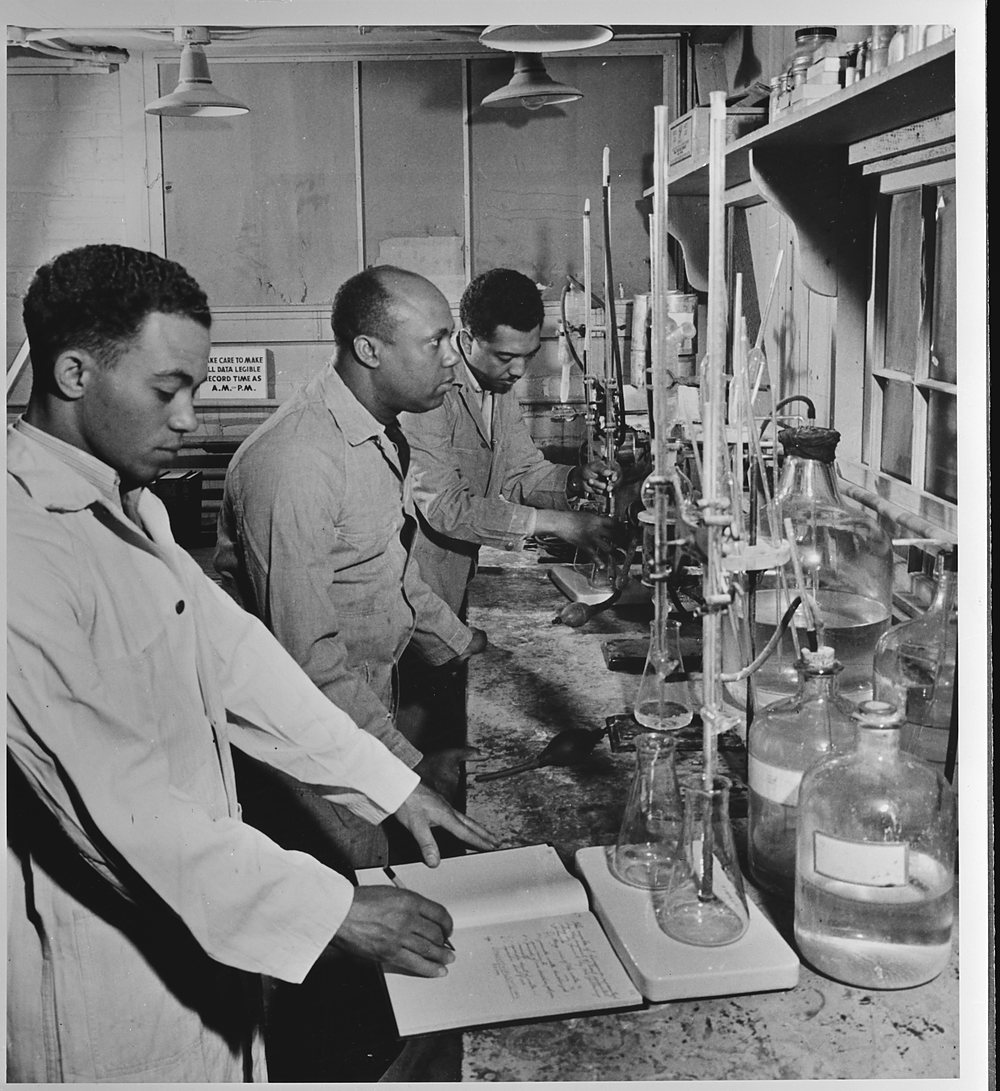
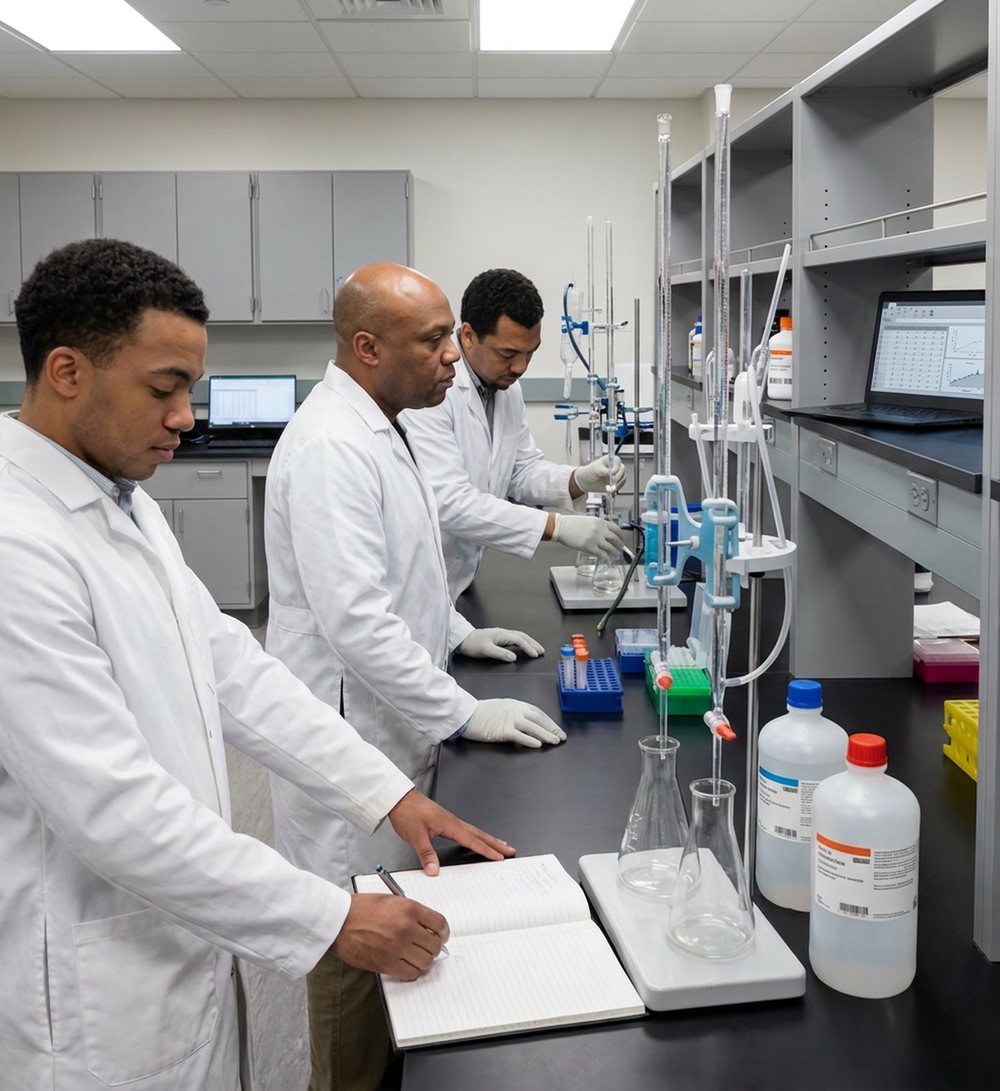
THEN · 1942 · Library of Congress · NOW · digitally rendered
THEN · 1942 · Alfred T. Palmer, Office of War Information · Library of Congress, Prints & Photographs Division, Farm Security Administration/Office of War Information Black-and-White Negatives · public domain by the collection’s statement; the item record carries no rights advisory of its own · loc.gov/item/2017697612 NOW · digitally rendered from the archive photograph above (Gemini 3 Pro Image, 2026-10-14): the room geometry, the camera and the people's positions are the photograph; everything else is generated. Not a photograph.01Practices
Four practices
Each practice brings together our experience with one kind of laboratory, across every product and service we offer. Open one to see the problems we meet most often there, the work we have delivered, and which tools fit and why.
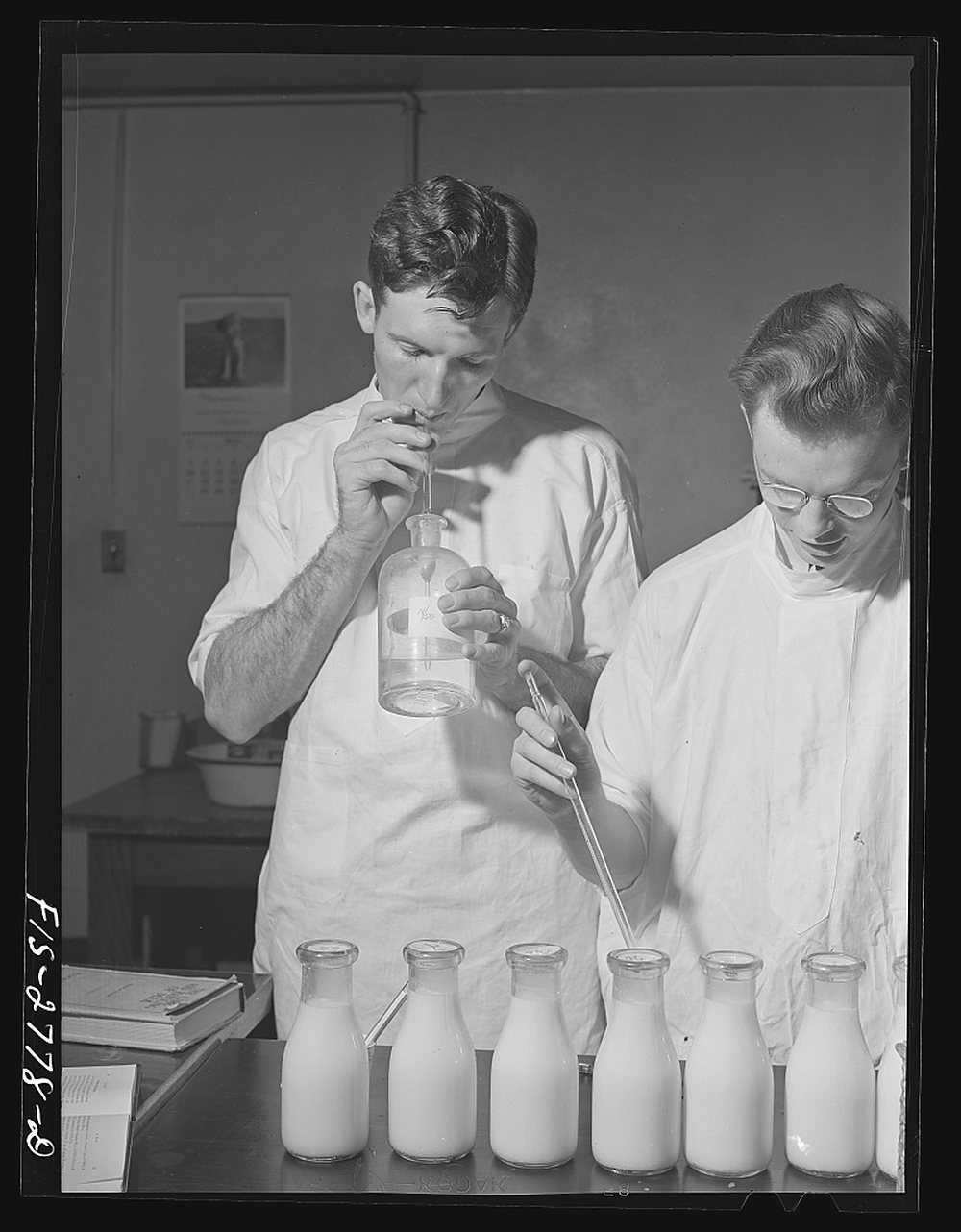
Veterinary Diagnostics
Start with
one submission form or one case workflow
Problems we see most
- Typed in twice
- Hard to see what work is waiting
- Results take too long
- Hard to reconstruct a record
- Software does not fit
1942, Library of Congress, no known restrictions
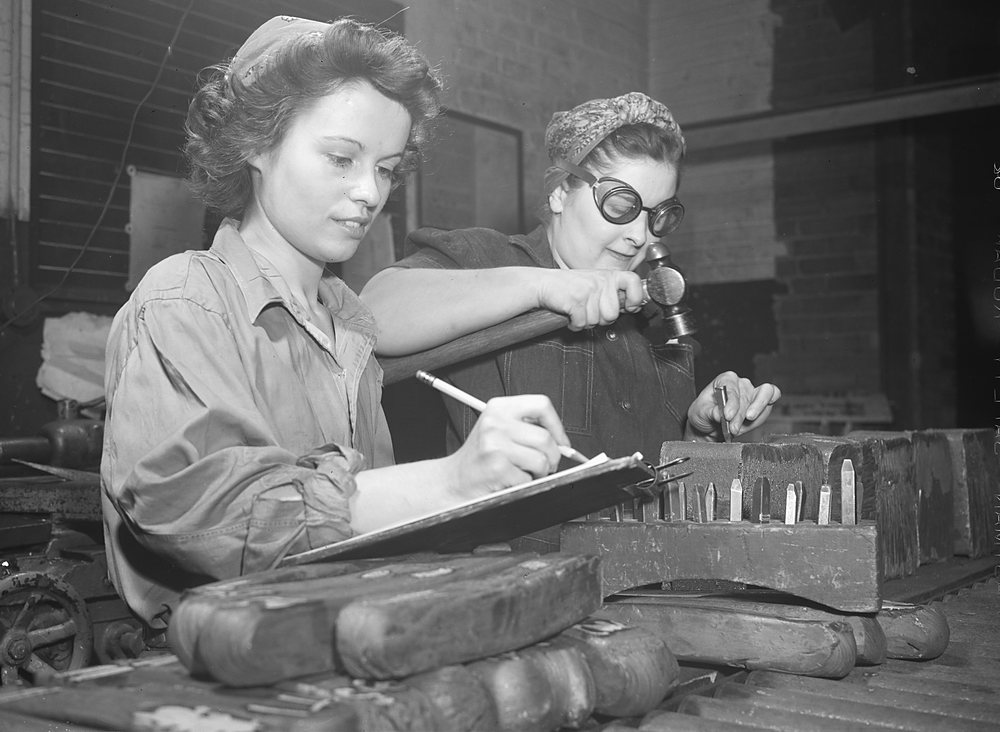
Transportation & Materials Testing
Start with
one field sheet or one test record
Problems we see most
- Typed in twice
- Systems do not share
- Hard to reconstruct a record
- Calibration records disconnected
- Reports assembled by hand
1943, Wikimedia Commons, no known restrictions
Government Research Laboratories
Start with
one request, from intake to result
Problems we see most
- Systems do not share
- Hard to reconstruct a record
- Software does not fit
- Work scattered across requests, samples, and results
- Workarounds and the few people who know them
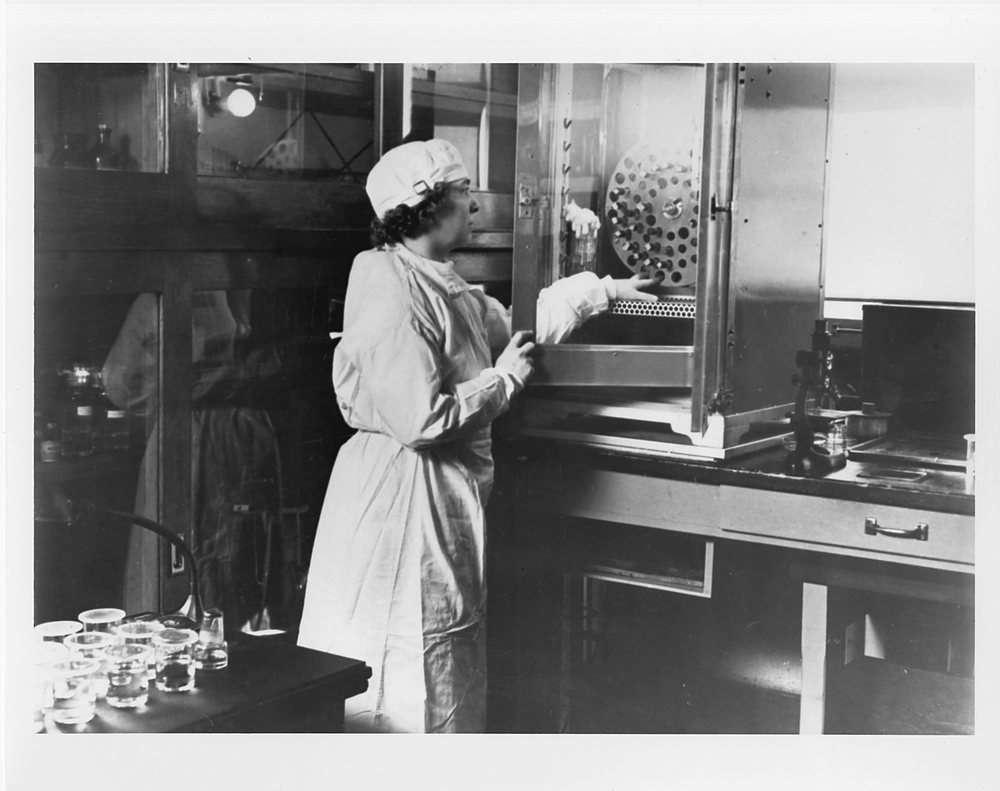
1937, National Library of Medicine, public domain
Laboratory Modernization
Start with
the workflow that slows your lab down the most
Problems we see most
- Typed in twice
- Hard to reconstruct a record
- Software does not fit
- Data does not add up
- Repeated manual follow-up
- Workarounds and the few people who know them
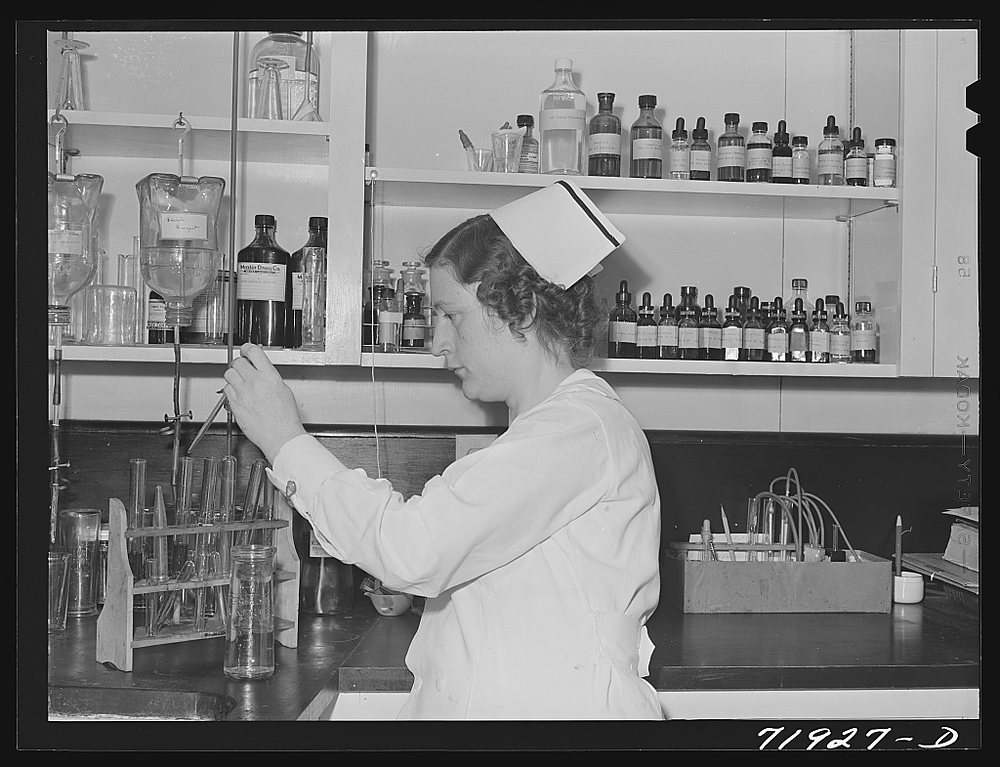
1942, Library of Congress, no known restrictions


02Start from a problem
Start from the problem instead
If you know the problem before the practice, start from the Laboratory Operations catalog. It sorts every problem into three groups by what goes wrong.
- Information that does not flow
- Work that is hard to coordinate
- Systems that are hard to trust or sustain
03How to begin
How to begin
Whichever route you take, the next step is a conversation about one form, report, record, or workflow from your laboratory.
We fix the price after the Understand phase, when we have studied your workflow on site and scoped the work with you.