

Labs we help
Veterinary Diagnostics
VetSci, in production since 2022 at University of Wisconsin Veterinary Care’s hospital laboratory, runs its diagnostic workflow from accessioning through reporting. Your first step is a thirty-minute conversation with an expert.
Veterinary diagnostic laboratories lose time when a submission form is typed in again, a case waits unseen in review, or a report reaches the submitter late. Start with one workflow and an Understand phase, our on-site analysis of your work at a fixed scope and price.
Follow each case from accessioning through review to the report.
Industries this practice serves
- State and university veterinary diagnostic laboratories
- Private veterinary reference laboratories
- Government animal health laboratories
- Wildlife, aquaculture, and poultry diagnostic laboratories
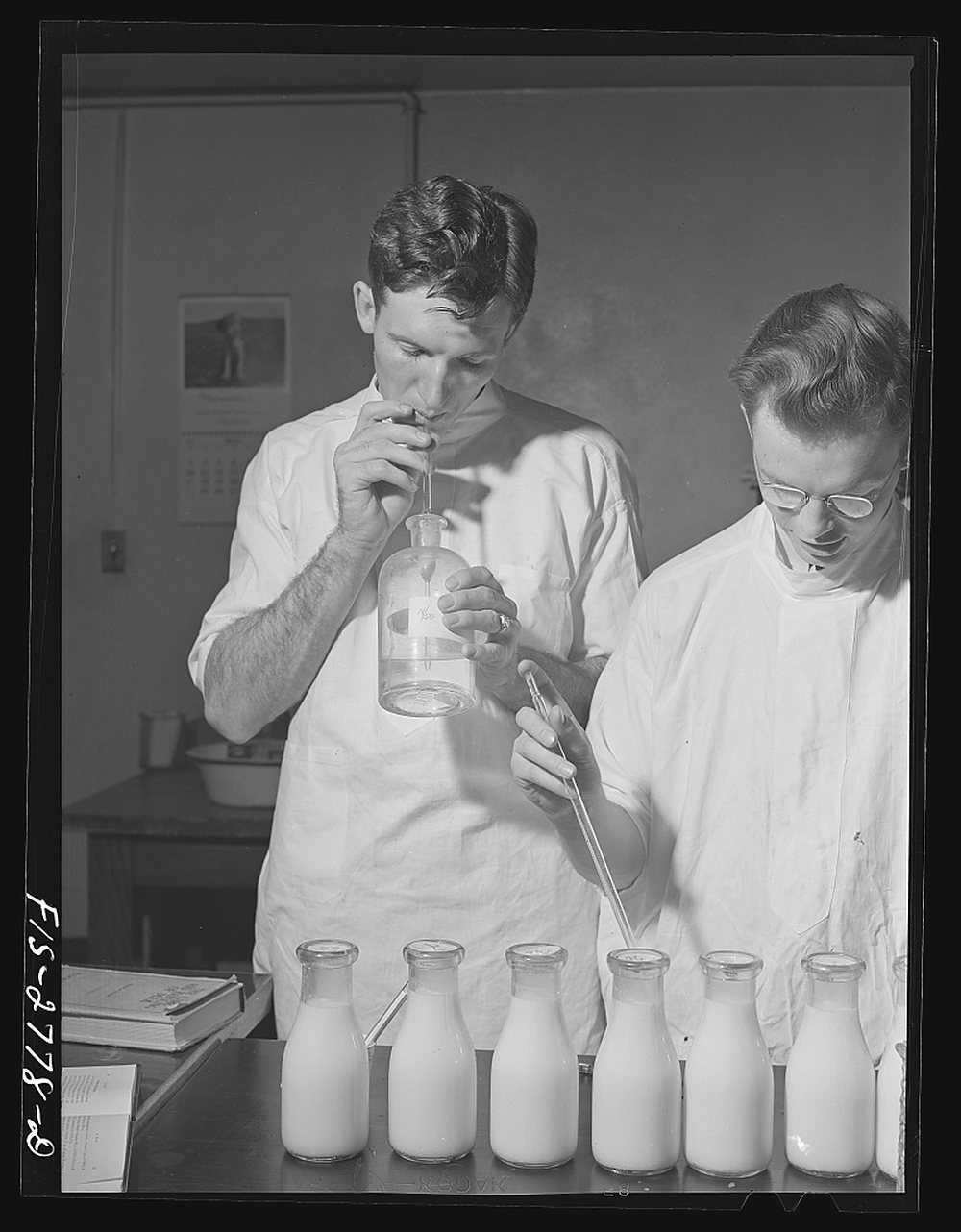
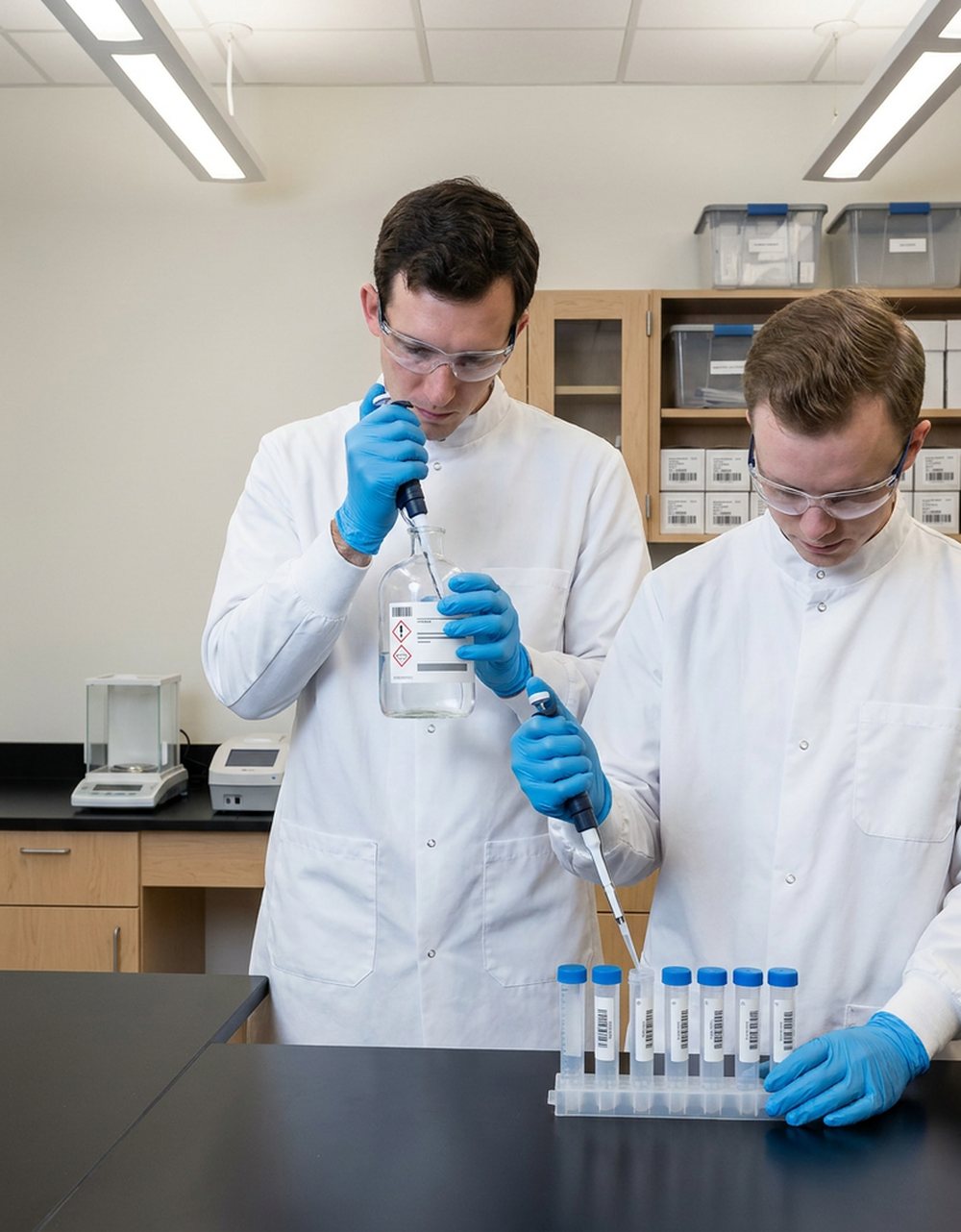
THEN · 1942 · Library of Congress · NOW · digitally rendered
THEN · 1942 · Delano, Jack, 1914-1997 · Library of Congress · Library of Congress, Prints & Photographs Division, FSA/OWI Black-and-White Negatives · no known restrictions NOW · digitally rendered from the archive photograph above (Gemini 3 Pro Image, 2026-09-15): the room geometry, the camera and the people's positions are the photograph; everything else is generated. Not a photograph.01Problems
Problems we solve
-
We type submission forms in again at accessioning.
Information the submitter already wrote on the form is entered again when the sample is accessioned. Each retyped field is another chance for an error. Read the full page on this problem
-
No clear view of which cases are waiting, or where they are stuck.
Between accessioning and the report, work waits in a queue, at a handoff or in review, and the team has to ask to find out where.
-
Reports that take too long to reach the submitters waiting for them.
Before anyone promises a faster report, agree where the interval starts and ends. Then look at queues and review delays first.
-
A case history that is hard to rebuild, from submission to report.
When the submission, the results, the review decisions, and the report are kept apart, the history of a case has to be pieced together by hand.
-
A LIMS that does not fit how your diagnostic laboratory works.
You can improve a LIMS, connect it, extend it, or replace it. We look at the smaller options first.
The Laboratory Operations catalog lists all twelve problems, grouped by what goes wrong.
02Tools
Right tool, right job
We choose tools around your workflow and the systems you already have.
- delivered example
- work delivered for an existing client and described on the Evidence page.
- available approach
- a product, module or service SynapticSci offers today.
-
Software
VetSci
delivered exampleThe problem A diagnostic record that has to follow each case from accessioning through review to the report.
Why it fits VetSci, our LIMS for veterinary hospital and diagnostic laboratories, runs in production in the veterinary hospital laboratory at University of Wisconsin Veterinary Care.
Prerequisites and limits VetSci becomes your record system, so we scope it in the Understand phase and run migration as a project of its own.
-
Your current systems
Existing laboratory systems and instruments
delivered exampleThe problem Results and records carried by hand between analyzers, the LIMS, and your other systems.
Why it fits For University of Wisconsin Veterinary Care, we have delivered interfaces for blood-gas, chemistry, immunoassay, susceptibility, coagulation, and microbiology identification analyzers.
Prerequisites and limits Access, interfaces, permission, and scope are assessed for each system before a connection is proposed.
How integrations are handled · See how project work is priced
-
Bench Tools
FormSense
available approachThe problem Submission forms and worksheets that arrive on paper and are typed in again at accessioning.
Why it fits FormSense reads the submission forms and result sheets you already receive, and a reviewer approves every field before anything reaches the LIMS.
Prerequisites and limits FormSense is available now, and the adapter to your LIMS is scoped with you.
Work around the tools
These are the services we carry out with your laboratory.
- Workflow assessment. We run the Understand phase on one workflow first. The four phases
- Integration. We build instrument interfaces per instrument and per laboratory. Integrations
- Migration. We run it as a project of its own. Active data moves first, history follows to an agreed depth, and you sign the reconciliation reports. Migration
- Ongoing improvement. Sustain keeps your system improving after go-live. You choose its Service Level and Coverage separately, and it is optional unless your contract requires it. Sustain
03Our approach
How we approach the work
Diagnosis
We start with your laboratory. The Understand phase covers on-site analysis, a needs summary, user stories, and plans. Nothing is built before it ends. The four phases
Constraints
Before we recommend a change, we list what has to hold. That means your records, interfaces, users, and operating requirements. It also means the accreditation work your laboratory carries. VetSci is designed to support AAVLD accreditation requirements, mapped clause by clause. Your laboratory validates the system and is accredited. Accreditation
Collaboration
We work by Scientist-Driven Development. Scientists, lab-informatics experts, and the people who will use the system shape it together, from the problem we observe to the support after go-live.
Interventions
The fix might be a changed step, a capability you already have, a connection between systems, or a focused tool. Replacing a system comes last, when nothing smaller will do.
We deliver in phases, starting with a fixed-scope on-site Understand phase, then one proven step at a time, so you see a working result before you commit further. How we work
04Evidence
Evidence
We have delivered work in a veterinary hospital laboratory.
University of Wisconsin Veterinary Care runs its hospital laboratory on VetSci, in production since 2022, from accessioning to the signed report. Accessioning, cases, instrument interfaces, review and sign-out, reporting, and invoicing sit on one Dataverse record, with microbiology, serology, and molecular sections. The laboratory’s own screens are shown in the conversation, with its permission.
See the record →
FormSense, our tool for paper forms, is available now. On real laboratory log sheets, it has turned handwriting into structured fields for a reviewer to approve. See FormSense on real laboratory log sheets.
05Your team
Who you would be working with
Your practice lead comes first, then the scientists who work in this practice. Meet the whole team on Our science.
Founder
Doug worked as a biologist, a research tech, and a product manager, with a background at Fisher Scientific, and learned along the way that the best people to help a scientist find the solution they need are other scientists.

Laboratory Informatics Scientist
06Getting started
Ways to begin
A focused fix, such as one integration or FormSense, costs less than a new LIMS with migration. We fix the price after the Understand phase. See How SynapticSci is priced.