

Labs we help
Government Research Laboratories
We help research and testing labs, from federal institutes to commercial environmental and contract testing labs, keep requests, samples, and results on one record.
The National Institute of Environmental Health Sciences moved its laboratory notebook workflows into LabSci, and our software also runs for other clients, including the materials testing laboratory at Maine DOT and UW Veterinary Care. Your first step is a thirty-minute conversation with an expert.
A request often arrives by email, its samples are logged in a spreadsheet, the instrument results stay on the instrument computer, and someone assembles the report by hand. A core facility running samples for other teams can work this way, and so can a commercial lab testing drinking water and soil for its clients. Start with one workflow and an Understand phase, our on-site analysis of your work at a fixed scope and price.
Connect the work of your research laboratory, without forcing every project into the same workflow.
Industries this practice serves
- Federal research institutes
- Federal science agency research laboratories
- State government research laboratories
- National laboratories and federally funded research centers
- Commercial environmental testing laboratories
- Contract testing laboratories
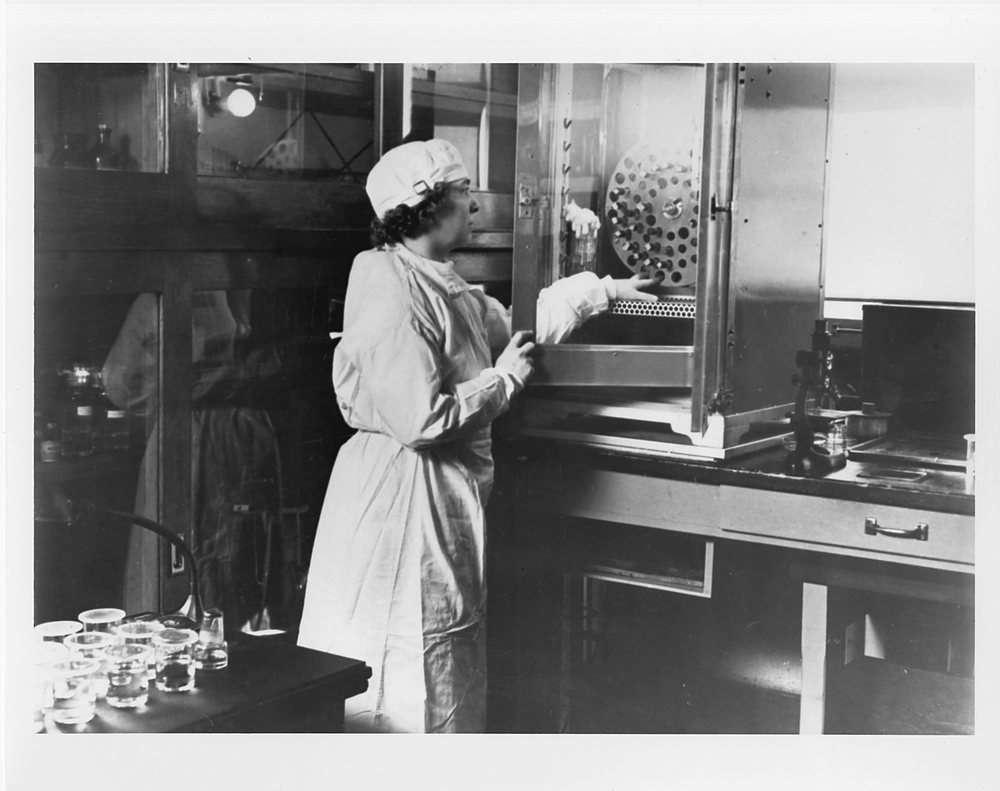
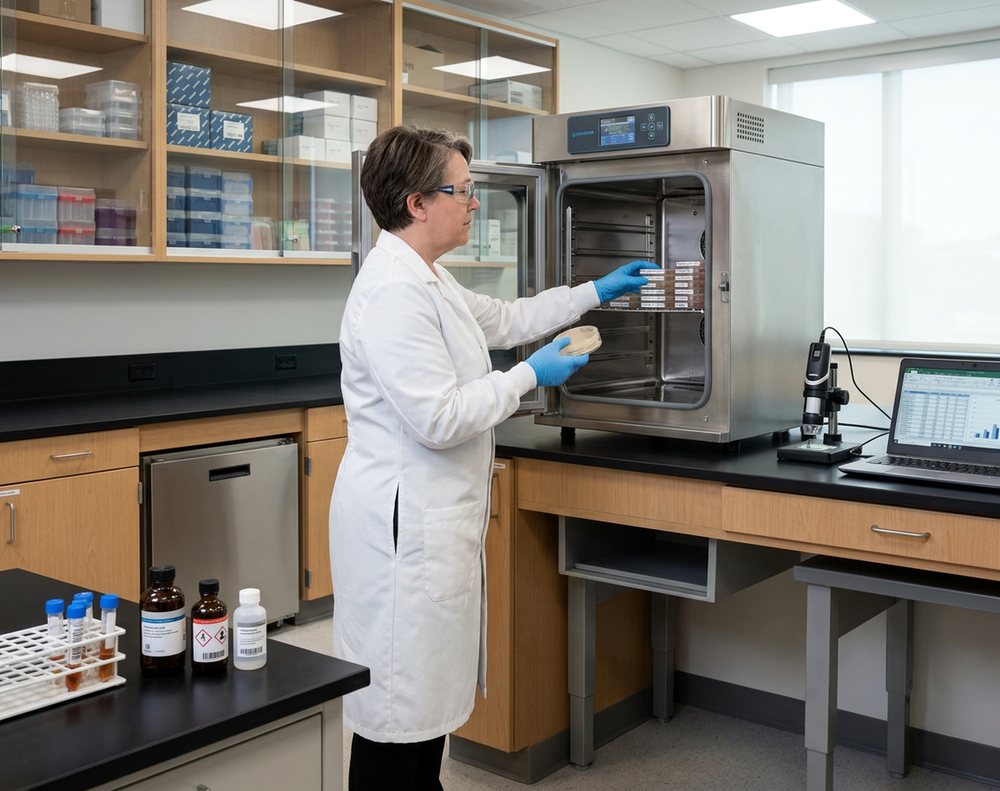
THEN · 1937 · National Library of Medicine · NOW · digitally rendered
THEN · 1937 · National Library of Medicine · public domain NOW · digitally rendered from the archive photograph above (Gemini 3 Pro Image, 2026-09-15): the room geometry, the camera and the people's positions are the photograph; everything else is generated. Not a photograph.01Problems
Problems we solve
These are the problems we see most often in government research laboratories.
-
Research records kept in tools that do not share them.
The same request, sample, or result is carried by hand from one tool to the next, and every copy has to be kept in step with the others.
-
Results that are hard to trace back to their samples and the request behind them.
When requests, samples, data, and results are kept apart, the context that explains a result has to be pieced together by hand.
-
Software that does not fit how your research projects actually run.
Research workflows vary from project to project, and not all of them fit a standard package. You can improve a system, connect it, extend it, or replace it. We look at the smaller options first.
-
One project’s request, samples, and results tracked in different places.
A request arrives, samples are received, and results come back. The project context that ties them together is kept somewhere else.
-
A research system that depends on the few people who know how it was set up.
When only a few people know how the system is configured, and why, every staff change and new project puts it at risk.
The Laboratory Operations catalog lists all twelve problems, grouped by what goes wrong.
02Tools
Right tool, right job
We choose tools around your workflow and the systems you already have.
- delivered example
- work delivered for an existing client and described on the Evidence page.
- available approach
- a product, module or service SynapticSci offers today.
- scope to assess
- something to establish with your laboratory in the Understand phase, before any tool is chosen.
-
Software
LabSci
delivered exampleThe problem Research records kept apart from the requests, samples, and results they belong to.
Why it fits LabSci keeps research records with their studies and samples on one platform. Laboratory notebook workflows moved into LabSci at the National Institute of Environmental Health Sciences.
Prerequisites and limits We scope the workflow, the data, the integrations, and the effort before anything is configured, and run migration as its own project.
-
Your current systems
Existing research and laboratory systems
scope to assessThe problem Requests, samples, and results carried by hand between the tools your laboratory already keeps.
Why it fits In the Understand phase, we work out which of your systems can be connected, and how.
Prerequisites and limits Access, interfaces, permission, and scope are assessed for each system before a connection is proposed.
How integrations are handled · See how project work is priced
-
Third-party analytics
Power BI
available approachThe problem Reports on studies and requests put together by hand from records kept in different places.
Why it fits We build Power BI reports, study tracking included, from the records you already keep, once the definitions behind them are agreed.
Prerequisites and limits Power BI reports on records but does not connect them, and report development is a service.
Reporting in the problem catalog · See how project work is priced
Work around the tools
These are the services we carry out with your laboratory.
- Workflow assessment. We run the Understand phase on one workflow first. The four phases
- Integration. We connect the systems your laboratory already keeps. Integrations
- Migration. We run it as a project of its own. Active data moves first, history follows to an agreed depth, and you sign the reconciliation reports. Migration
- Ongoing improvement. Sustain keeps your system improving after go-live. You choose its Service Level and Coverage separately, and it is optional unless your contract requires it. Sustain
03Our approach
How we approach the work
Diagnosis
We start with your laboratory. The Understand phase covers on-site analysis, a needs summary, user stories, and plans. Nothing is built before it ends. The four phases
Constraints
Before we recommend a change, we list what has to hold. That means your records, interfaces, users, and operating requirements. It also means the environment the system must run in and your organization’s approval process. Your laboratory validates the system and remains responsible for it. Platform certifications belong to Microsoft, and we cite them as Microsoft’s. Trust and validation
Collaboration
We work by Scientist-Driven Development. Scientists, lab-informatics experts, and the people who will use the system shape it together, from the problem we observe to the support after go-live.
Interventions
The fix might be a changed step, a capability you already have, a connection between systems, or a focused tool. Replacing a system comes last, when nothing smaller will do.
We deliver in phases, starting with a fixed-scope on-site Understand phase, then one proven step at a time, so you see a working result before you commit further. How we work
04Evidence
Evidence
Our delivered work in this practice is at the National Institute of Environmental Health Sciences.
At the National Institute of Environmental Health Sciences, laboratory notebook workflows moved into LabSci, a configurable platform built natively on Microsoft Dataverse and the Power Platform. The institute’s own screens are shown in the conversation, with its permission.
See the record →
05Your team
Who you would be working with
Your practice lead comes first, then the scientists who work in this practice. Meet the whole team on Our science.

Founder
Doug worked as a biologist, a research tech, and a product manager, with a background at Fisher Scientific, and learned along the way that the best people to help a scientist find the solution they need are other scientists.

Laboratory Informatics Scientist
06Getting started
Ways to begin
Start with one workflow, such as keeping a request, its samples, and its results together. The Understand phase asks about the environment the system must run in and your organization’s approval process, and we fix the price after it. See How SynapticSci is priced.