

Laboratory Operations
Systems do not share the information people need.
It comes up in every kind of lab we work with, from veterinary diagnostic to materials testing labs.
For the Maine Department of Transportation, the team that founded SynapticSci delivered the exchange between its laboratory records and the state’s transportation information system. Your first step is a thirty-minute conversation with an expert.
When a laboratory’s systems do not share what each one needs, people carry records across by hand, copies drift apart, and no one is sure which copy is right. We have connected analyzers to the record at University of Wisconsin Veterinary Care and built an exchange with the state’s transportation information system for Maine Department of Transportation. Start by agreeing which system owns each record, then talk with us about the first connection.
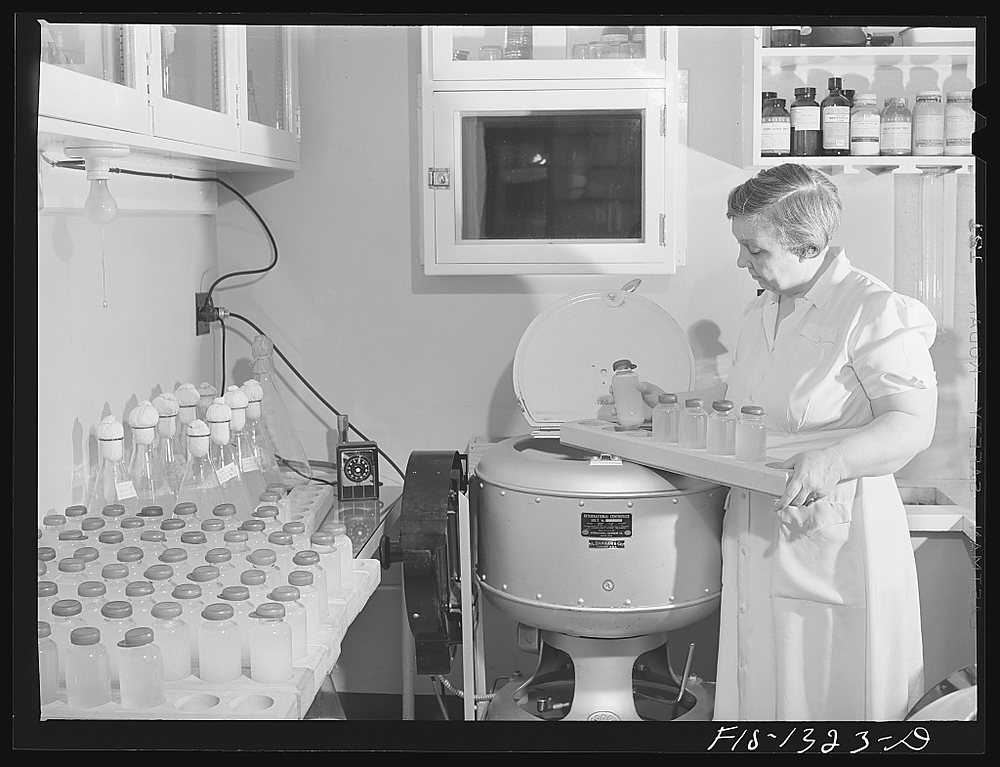
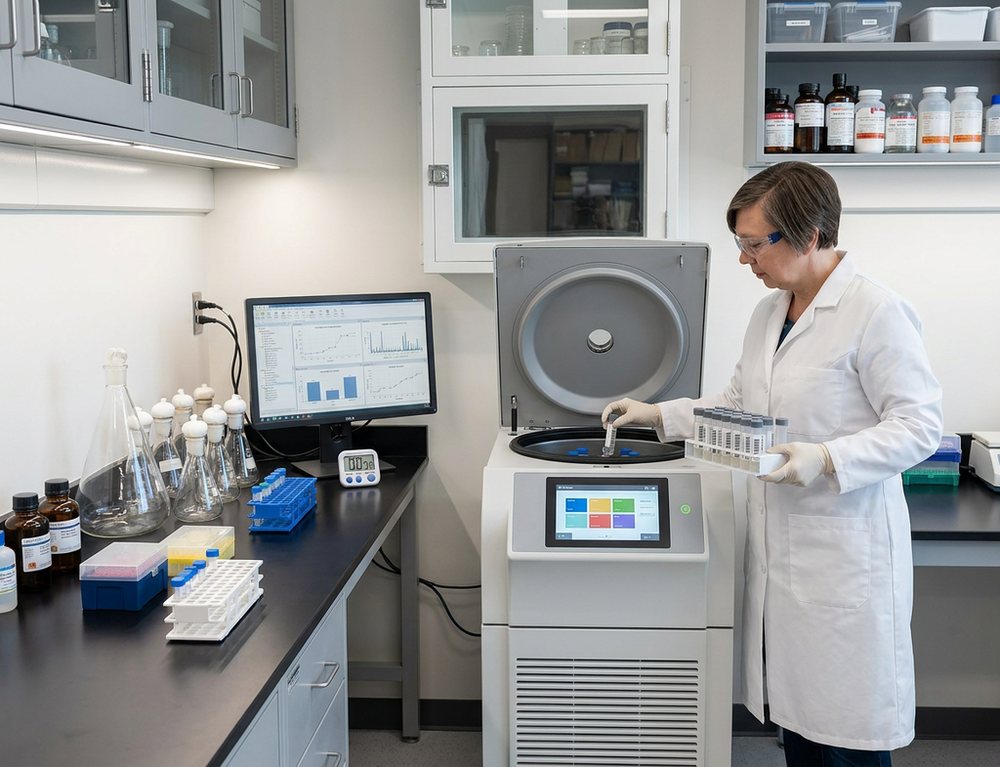
THEN · 1942 · Library of Congress · NOW · digitally rendered
THEN · 1942 · Library of Congress · Library of Congress, Prints & Photographs Division, FSA/OWI Black-and-White Negatives · no known restrictions NOW · digitally rendered from the archive photograph above (Gemini 3 Pro Image, 2026-09-26): the room geometry, the camera and the people's positions are the photograph; everything else is generated. Not a photograph.01The difficulty
People carry records from one system to the next
The information exists, but in a system that does not pass it to the one where it is needed. People carry it across by hand or work without it, and the people in the laboratory become the glue between its systems.
02Where it occurs
Wherever one system’s record is another system’s input
- Analyzer results that the laboratory record needs.
- Orders and results passing to and from a practice-management system.
- Test results that an engineering or project system needs.
- Requests, samples, and results kept in separate tools.
The laboratories that meet it first
- Transportation & Materials Testing, where a laboratory record and an engineering system do not share results.
- Government Research Laboratories, where research records sit in tools that do not share them.
Other problems are in the Laboratory Operations catalog.
03Why it matters
Two copies of a record drift apart
Once a record lives in two systems, someone has to decide which one owns it. Until that is settled, every copy has to be kept in step by hand. When results reach another system by being typed in again, the second copy can become the one that decisions are made from.
04Before changing it
Settle ownership before you connect anything
Agree which system owns each record. Then list what each connection has to carry, in which direction, and who may change the record at each end. We assess access, interfaces, and permissions for each system in the Understand phase, our on-site analysis of your workflow at a fixed scope and price, before we propose a connection.
Judge the result by whether each record has one owner and whether anyone still carries information between systems by hand.
05Approaches
From a process change to a new system
Change the process
When two systems both accept changes to the same record.
Use a capability you already have
When one system can already export or import what the other needs.
Connect the systems
When both stay.
Add a focused tool
When a single gap remains.
Replace a system
Only when connecting the systems you keep cannot give each record a clear owner.
06Tools and services
What fits, and when
- delivered example
- work delivered for an existing client and described on the Evidence page.
- available approach
- a product, module or service SynapticSci offers today.
- scope to assess
- something to establish with your laboratory in the Understand phase, before any tool is chosen.
- delivered example Instrument interfaces Fits when an analyzer or a practice-management system holds information the laboratory record needs. Delivered for University of Wisconsin Veterinary Care.
- delivered example Exchange with a transportation information system Fits when test results belong to projects tracked in a system outside the laboratory. Delivered for Maine Department of Transportation.
- available approach LabSci Fits when the record other systems depend on needs a managed home. Explore LabSci
- scope to assess Existing systems Fits when you keep a system and connect it. Integrations and connectors
- available approach FormSense Fits when paper is the gap between systems. Explore FormSense
07Getting started
Start with one record that two systems both need
Start with the part of the workflow that needs attention. The work comes in three sizes.
- An assessment finds which system owns each record and what each connection has to carry. That is our Understand phase.
- A focused intervention connects one pair of systems, or changes the process so that one system owns a record.
- A broader change adds software, implementation, data migration, and the ongoing services you choose.
We give a price once the work is sized to your records, interfaces, and users. The first step is a conversation with an expert about one record that two of your systems both need.