

Transportation & Materials Testing
We type field records in again when specimens reach the laboratory.
The Maine Department of Transportation runs its materials-testing laboratory on DOTSci, and our software also runs for other clients, including UW Veterinary Care and NIEHS. Your first step is a thirty-minute conversation with an expert.
When a specimen reaches the bench, the details a field crew wrote on the sheet are often typed in again, and the field sheet becomes the only record of where the specimen came from. We built DOTSci with the materials-testing division of the Maine Department of Transportation. Start with one field sheet and an Understand phase, our on-site analysis of your work at a fixed scope and price.
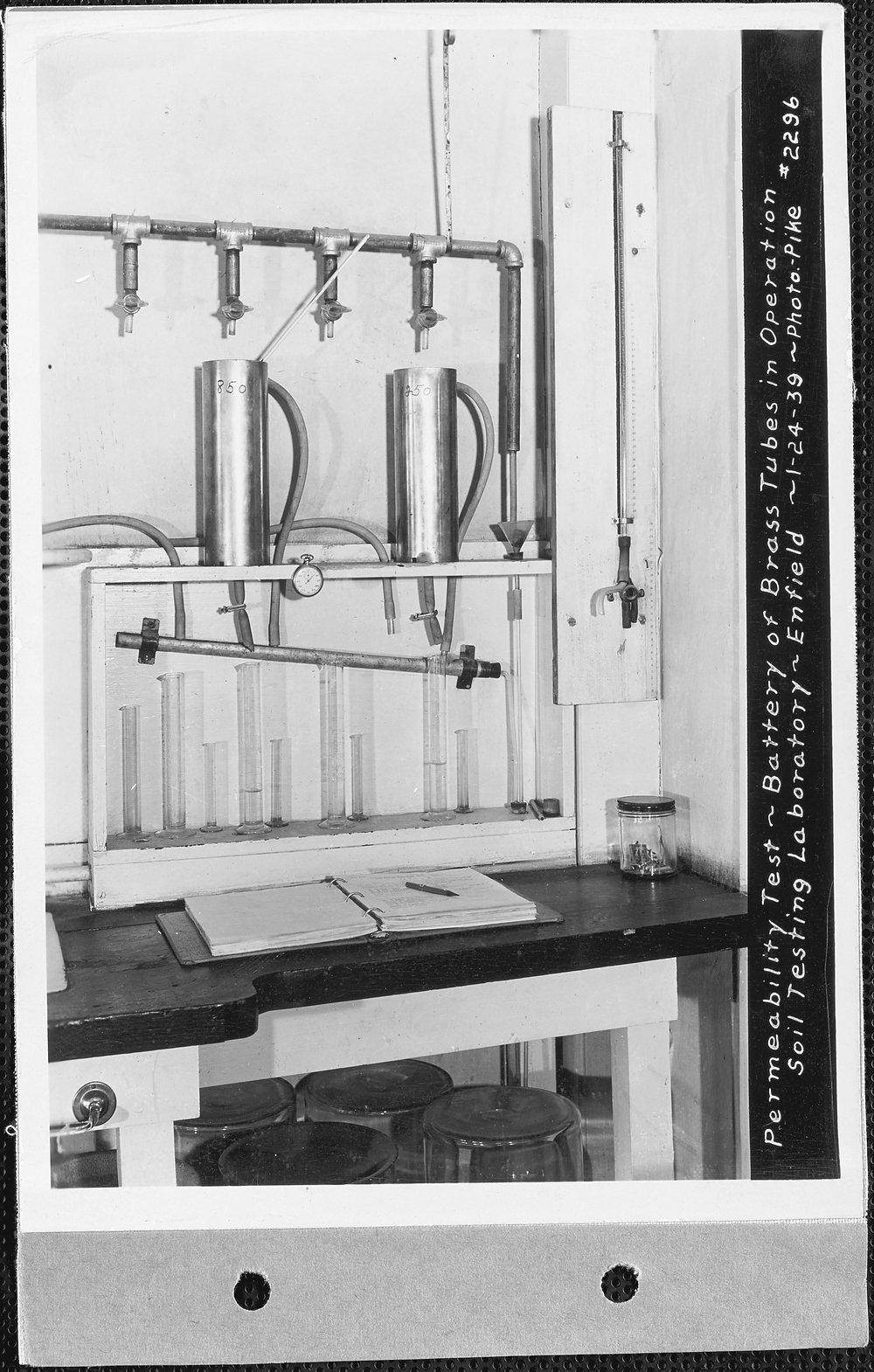
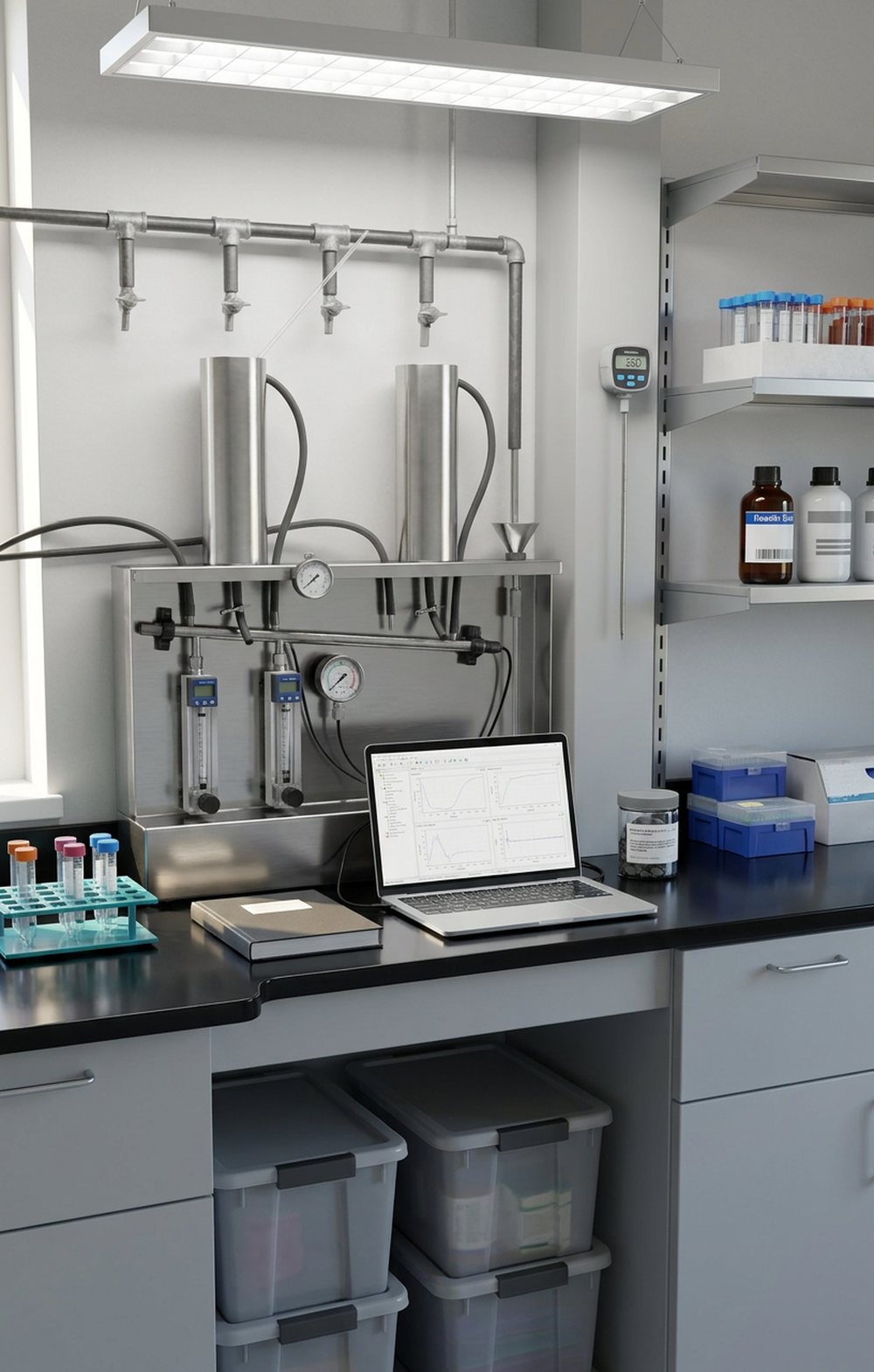
THEN · 1939 · Wikimedia Commons · NOW · digitally rendered
THEN · 1939 · Wikimedia Commons · public domain NOW · digitally rendered from the archive photograph above (Gemini 3 Pro Image, 2026-09-26): the room geometry, the camera and the people's positions are the photograph; everything else is generated. Not a photograph.01The difficulty
The field sheet is typed in again at the bench
A field crew takes a specimen and writes its details on a field sheet. When the specimen reaches the laboratory, what the crew wrote is typed in again. By then, the field sheet is the only record of where the specimen came from and who took it.
02Where it occurs
Wherever specimens are taken outside the laboratory
Specimens are sampled in the field, from soils and aggregates to asphalt and concrete, and come back to the bench as cylinders, cores, and bags.
A field crew can be sampling where there is no signal, so a record that needs a connection cannot always be digitally captured where the specimen is taken.
03Why it matters
The custody chain starts where the specimen is taken
A materials result is only as defensible as the calibrated equipment and custody chain behind it, and that chain starts in the field. Paperwork from the field can arrive late or not at all.
04Before changing it
Decide where the specimen gets its label
Establish where each specimen’s record is first written, by whom, and whether there is signal there. Decide whether the specimen gets its label where it is taken or when it reaches the laboratory. Your sampling procedure, and the person who follows it, stay as they are.
Judge the result by whether the bench still types anything from a field sheet.
05Approaches
From a process change to a new system
Use one of these approaches, or combine them.
- Change the process when field sheets carry details no later step uses. Record only what the specimen’s chain needs, where it is taken.
- Use a capability you already have when your laboratory system can already record a specimen in the field and hold the record until there is signal.
- Connect the systems when the field record already sits in another system. An exchange carries it to the laboratory record.
- Add a focused tool when field sheets will keep arriving on paper. Reviewed intake reads the sheet at the laboratory.
- Replace a system when the laboratory record cannot follow a specimen from the field. A system with offline field capture logs the specimen where it is taken.
06Tools and services
What fits, and when
Every tool and service for these laboratories is on the Transportation & Materials Testing page. These are the ones that fit this problem.
- available approach
- a product, module or service SynapticSci offers today.
- scope to assess
- something to establish with your laboratory in the Understand phase, before any tool is chosen.
- available approach DOTSci Fits when the record has to be written where the specimen is taken, even with no signal. It logs and barcodes the specimen offline, and synchronizes when there is signal. Explore DOTSci
- available approach FormSense Fits when field sheets will keep reaching the laboratory on paper. Explore FormSense · FormSense on real laboratory log sheets
- scope to assess Existing systems Fits when you keep the laboratory system you run and connect it. Integrations and connectors
- scope to assess Workflow assessment Fits when it is not yet clear where each specimen’s record is first written. The Understand phase
08Getting started
Start with one field sheet
Start with the part of the workflow that needs attention. The work comes in three sizes.
- An assessment finds where each specimen’s record is first written, whether there is signal there, and where the specimen gets its label. That is our Understand phase.
- A focused intervention changes one point of re-entry, with a process change, an exchange, or FormSense on field sheets that still arrive on paper.
- A broader change adds software, implementation, data migration, and the ongoing services you choose.
We give a price once the work is sized to your records, interfaces, and users.